Using a Mauritius Holding Company to Structure Investment Into Africa
For multinational groups and institutional investors, Mauritius has solidified its position as the premier investment gateway into Africa. According to the Bank of Mauritius's June 2026 Financial Stability Report, US$1.3 billion in foreign direct investment (FDI) flowed through Mauritius into Africa in the second half of 2025, with 51.4% of its active Global Business Companies (GBCs) focused entirely on African markets like Nigeria, Kenya, and South Africa.
For finance directors, legal advisers, family offices and corporate service providers planning investments across Africa, using a Mauritius holding company for structuring investment into Africa requires an understanding of the key regulatory, tax and legal frameworks governing cross-border investments.
Why Investors Use Mauritius to Structure Investment Into Africa
Mauritius offers several advantages for international investors using the Mauritius-Africa investment corridor to structure investments in African operating subsidiaries.
- Situated in the Indian Ocean, Mauritius serves as an established financial centre connecting international investors with markets across sub-Saharan Africa, Asia and Europe, with Port Louis acting as its main financial and commercial hub.
- Consistently ranked among Africa's leading countries for governance, rule of law and institutional strength, Mauritius offers political stability and regulatory credibility for cross-border investment structuring.
- Mauritius's tax treaty network includes Double Taxation Avoidance Agreements (DTAAs) with several African countries, which may reduce withholding tax on payments from African operating subsidiaries, subject to economic substance requirements.
- Mauritius has Investment Promotion and Protection Agreements (IPPAs) with several African countries, offering qualifying investors protection against expropriation and discriminatory treatment, subject to applicable treaty terms.
- As a member of COMESA, SADC and AfCFTA, Mauritius benefits from preferential trade arrangements for qualifying goods and broader market access across African regions, including East Africa's trade and investment corridors.
- Mauritius has no exchange controls, generally allowing investors to transfer and repatriate capital, profits and dividends, subject to applicable banking and compliance requirements.
- Mauritius's banking ecosystem supports multi-currency business accounts in USD, EUR, GBP and ZAR, enabling cross-border payments and a consolidated view of cash positions.
What a Mauritius GBC Is and How It's Used as a Holding Company
A Global Business Company (formerly known as a Category 1 Global Business Licence company) is a Mauritius-resident company incorporated under the Mauritius Companies Act 2001 and holds a Global Business Licence issued by the Financial Services Commission (FSC Mauritius) used for international holding, trading, and investment activities. Multinational groups, private equity investors and family offices use a GBC as an investment holding structure for African operating subsidiaries, to receive dividends and manage cross-border investments.
Corporate Tax and Partial Exemption
Under the Mauritius Income Tax Act, GBCs are generally subject to a 15% corporate tax rate. The Mauritius Revenue Authority (MRA) partial exemption regime (which replaced the deemed foreign tax credit regime in 2019) provides an 80% partial exemption on qualifying income, including eligible foreign dividends, potentially reducing the effective tax rate to 3%, subject to applicable conditions.
Mauritius generally imposes no capital gains tax or withholding tax on dividends. Interest paid to qualifying non-residents may also be exempt from withholding tax.
Global Business Licence and Substance Requirements
To qualify for the partial exemption and maintain tax residency status, a Mauritius GBC must fulfil strict regulatory, governance, and economic substance requirements, including:
- Obtaining a Global Business Licence from the FSC through an authorised management company.
- At least two Mauritius-resident directors ensuring genuine management and control in Mauritius, rather than acting solely as nominee directors.
- Adequate local activities, qualified personnel and expenditure proportionate to its business.
- A registered office, principal Mauritius bank account and locally maintained accounting records.
- Meeting applicable company secretary, accounting and auditing requirements.
- Obtaining a tax residency certificate from the Mauritius Revenue Authority (MRA) when required to claim benefits under applicable tax treaties.
It's important to note here that a registered agent or virtual office alone cannot replace the licensed management company and genuine local management required for a Mauritius GBC.
Can a Mauritius Holding Company Automatically Claim Tax Treaty Benefits?
No. A Mauritius holding company must meet applicable tax residency and treaty requirements. Anti-abuse provisions, including the Principal Purpose Test (PPT) and limitation of benefits clauses where applicable, may restrict treaty benefits. Genuine business activity helps demonstrate that the company is not merely a letterbox entity.
What International Tax Rules Affect a Mauritius Holding Company Investing in Africa
Investors must consider tax rules in Mauritius, their home jurisdiction and the countries where their African subsidiaries operate. When using a Mauritius holding company to structure investment into Africa, these requirements can affect how investments are financed, profits are distributed and cross-border tax obligations are managed.
Thin Capitalisation Rules
May limit interest deductions when a Mauritius holding company finances African subsidiaries through related-party loans.
Controlled Foreign Corporation (CFC) Rules
May require a parent company to pay tax on certain profits earned by its Mauritius holding company, depending on the parent's jurisdiction.
Transfer Pricing Rules
Related-party transactions between a Mauritius holding company and its African subsidiaries, including intercompany loans, management fees and royalties, may need to comply with arm's-length pricing requirements. Applicable documentation and reporting obligations depend on the jurisdictions involved and the nature and value of the transactions.
Structuring the Investment: Mauritius Holdco Into African Opco
Private equity funds, venture capital investors and multinational companies may use Mauritius GBCs as intermediary holding companies to manage ownership, financing and investments across multiple African markets.
The Typical Structure
A Mauritius holding company (HoldCo) structure connects international investors with African operating subsidiaries through two main corporate layers:
The Intermediary Layer
Investors or founders incorporate a Mauritius GBC, which acts as the top-level holding company (HoldCo).
The Operational Layer
The Mauritius GBC holds shares in one or more African operating companies (OpCos), which may include a trading subsidiary in Kenya, a manufacturing company in South Africa or a service business in Nigeria.
Why Use an Intermediary Layer?
Investing directly in African operating companies from an investor's home jurisdiction (like the US, UK, or Europe) may create tax, legal and operational complexities. A Mauritius GBC may help address these challenges through three mechanisms:
Tax Treaty Advantages
Mauritius's extensive network of tax treaties with African countries may reduce withholding taxes on dividends, interest and royalties paid by African OpCos to the HoldCo. Some treaties may also provide capital gains tax relief when investors exit their investments, subject to applicable conditions.
Legal and Asset Management
Mauritius's mixed Anglo-French legal system and established corporate governance framework provide a familiar environment for international investors and lenders. Intellectual property, including software and trademarks, can also be centralised at the HoldCo level, potentially reducing exposure to certain local legal and operational risks.
Flexible Exits and Reinvestment
Buyers may acquire shares in the Mauritius HoldCo rather than purchasing individual African subsidiaries, potentially simplifying exits, although local taxes and regulatory approvals may still apply. Capital can also be pooled at the HoldCo level and reinvested into regional OpCos, potentially without immediate taxation in the parent's home jurisdiction, depending on applicable tax rules.
To support this structure, a Mauritius HoldCo must maintain a principal bank account in Mauritius and may use an additional international account for cross-border transactions, while its African OpCos need local business accounts for payroll, supplier payments and revenue collection.
Completing the Structure: Corporate Banking for Africa-Facing Transaction Flows
Since Mauritius is not a frictionless jurisdiction, opening a business account for holding companies requires compliance-led onboarding under stringent AML and KYC requirements. Mauritius GBCs with non-resident directors and Africa-facing, multi-jurisdictional operations may face additional scrutiny from traditional banks. International standards, including those promoted by OECD, require businesses to balance tax efficiency with operational and banking transparency.
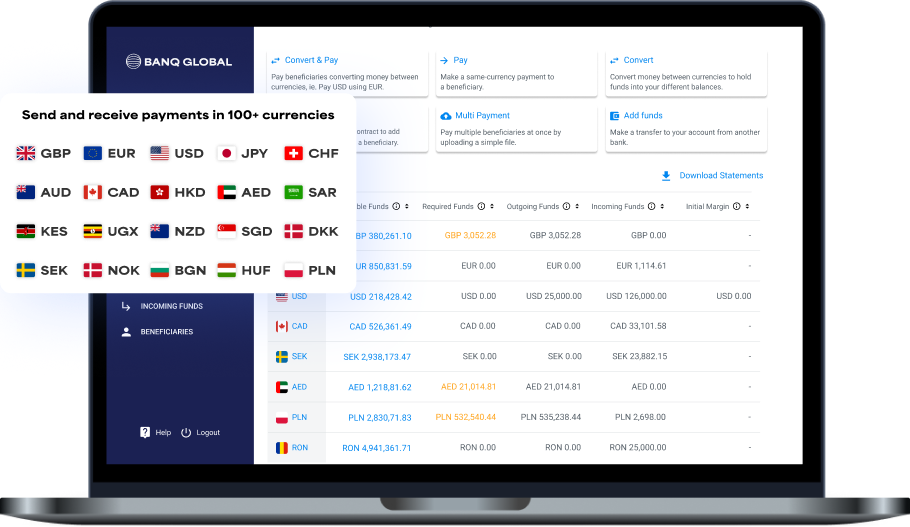
For businesses using a Mauritius GBC holding structure to invest in Africa, Banq Global offers specialist international business accounts in 20+ jurisdictions, supporting operations across markets such as Nigeria, Kenya and South Africa. It accepts non-resident directors and international shareholders, supports 30+ currencies and provides dedicated onboarding assistance. Account opening typically takes five working days after receiving complete documentation, although some accounts may open within two days, subject to compliance approval. For GBCs in Mauritius, Banq Global's international business account serves as a secondary account alongside the required principal Mauritius bank account, creating a dual-account structure for managing Africa-facing transaction flows.
FAQs
Is Mauritius a Tax Haven for Mauritius Holding Companies?
Mauritius offers tax benefits for holding companies but also follows international tax and compliance standards. It has strengthened economic substance requirements for GBCs and follows OECD tax transparency standards. Mauritius was removed from the EU list of non-cooperative jurisdictions for tax purposes in 2021 and the FATF grey list in October 2021.
What Other Investment Structures Are Available in Mauritius Besides GBCs?
Besides GBCs, Mauritius offers Variable Capital Companies (VCCs), Protected Cell Companies (PCCs), limited partnerships and foundations. These structures support private equity funds, collective investment schemes (CIS), investment holding and wealth management. Licensed fund administration services help meet operational and regulatory requirements.
Can Non-Residents Own and Direct a Mauritius GBC Holding Company?
Yes. Non-resident directors and shareholders are standard for Mauritius GBCs used in international group structures. Banq Global specifically accepts non-resident directors and shareholders for the business account side of the structure.
What Documents Are Needed to Set Up a Mauritius GBC and Its Business Account?
Typical documents include a company constitution, incorporation and licensing applications, a business plan, shareholder and director details, proof of identity and address, beneficial ownership information and evidence of source of funds. Banks may also request the Certificate of Incorporation, Global Business Licence, board resolution, financial statements and evidence of business activities, depending on their compliance requirements.
How Long Does It Take to Set Up a Mauritius Holding Company and Open Its Business Account?
Offshore company formation in Mauritius involves company incorporation and obtaining a Global Business Licence from the FSC. Processing times depend on documentation, regulatory approvals and the authorised management company. Once incorporated and licensed, opening a Banq Global business account typically takes five working days after complete documentation is received, subject to compliance approval.
What Are the Costs Involved in Maintaining a Holding Company in Mauritius and Its Business Account?
Ongoing costs include the FSC annual licence fee of US$2,600, company registration fees, licensed management company services, company secretary fees, accounting, auditing and compliance expenses. Business account costs vary by bank and may include account maintenance, transaction and international transfer fees.
What Ongoing Compliance Is Required After Setting Up a Mauritius Holding Company?
A Mauritius GBC holding company must maintain economic substance, meet GBC accounting and auditing requirements, and complete annual FSC filings, including submitting audited financial statements within six months of its financial year-end. It must also file tax returns with the Mauritius Revenue Authority (MRA), maintain records of beneficial ownership, intercompany payments and transactions with African operating subsidiaries, and comply with ongoing AML/CFT requirements.