
Open A Business Account In Kenya
For international companies trading with Kenya that need control over payments, FX, and trapped funds
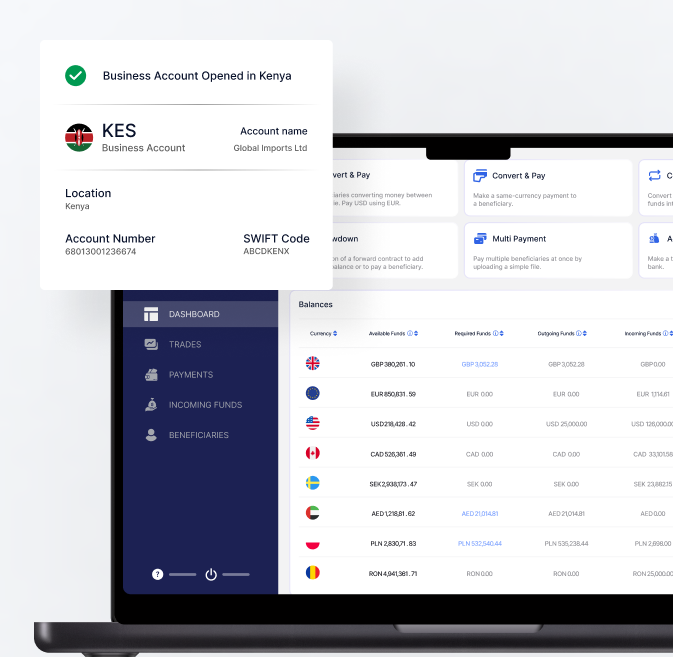
Overview
If your company trades with Kenya but lacks appropriate local banking and regulatory infrastructure, you are likely experiencing delays, restrictions, and unnecessary risk. Planning for compliance with Kenya Revenue Authority requirements and local tax obligations is essential to avoid regulatory setbacks.
Many international companies operating in Kenya face the same issues:

Challenge 1: Trapped funds
Funds often accumulate in Kenya due to FX limits, approval delays, or lack of access to USD.This results in capital being stuck, reduced cash flow visibility, and limited ability to deploy funds elsewhere.
Challenge 2: Currency devaluation risk
Holding KES balances exposes companies to depreciation, causing potential losses while funds remain trapped and inactive.
Challenge 3: Outbound payment limits
Many companies face caps on how much can be sent offshore, creating cash flow issues, uncertainty, and time spent managing workarounds. Companies are often forced to access credit facilities to support cash flow and facilitate payments.
Challenge 4: Operational delays
Without a Kenyan account, even simple settlements can take weeks, often resulting in delays, strained relationships with suppliers and customers, and operational disruption.
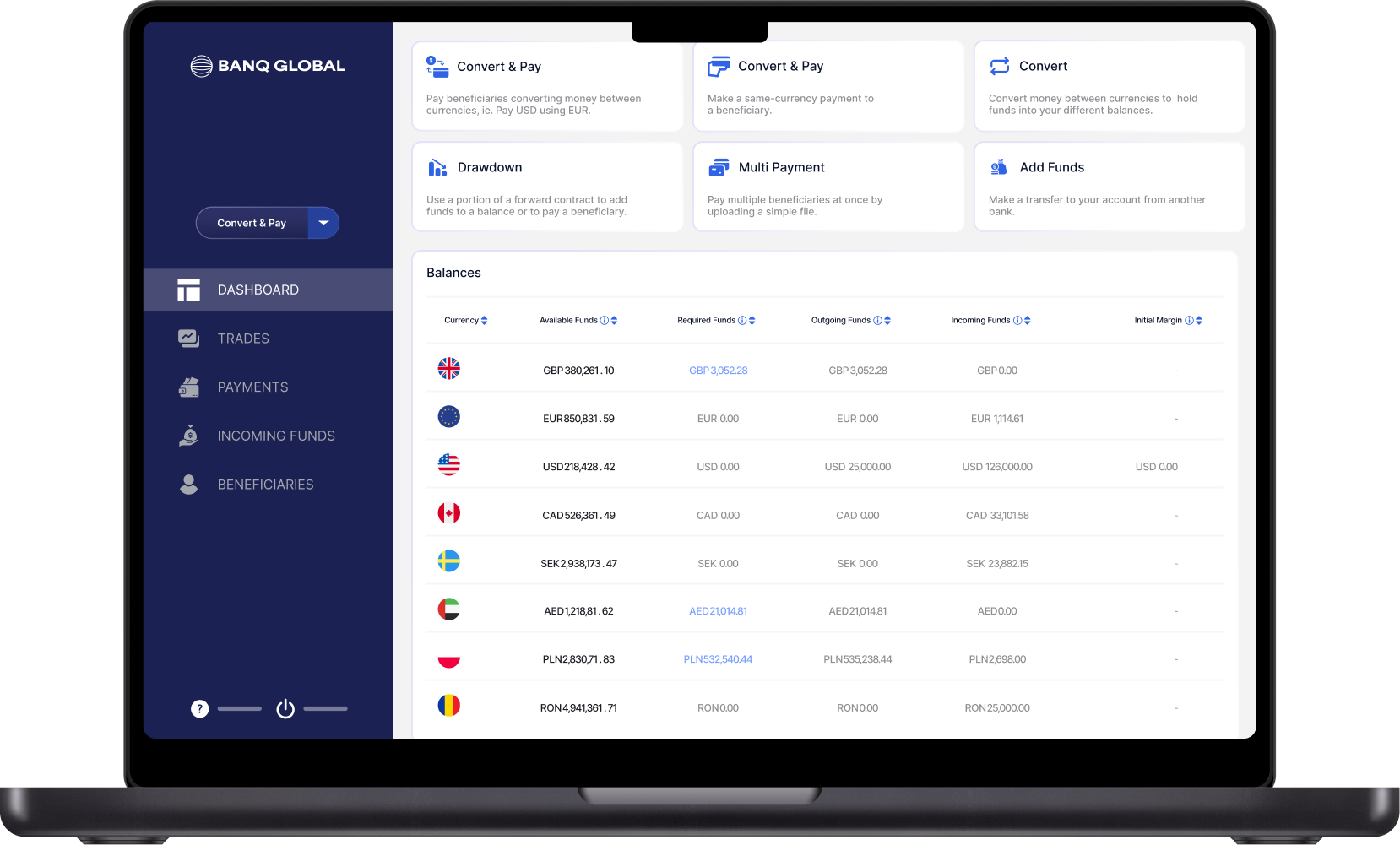
Who this solution is designed for
It is designed for established, mid-sized to large international companies with customers or suppliers in Kenya that generate large Shilling inflows (typically $500k+ equivalent per month) and face challenges repatriating funds. It is built for businesses seeking a secure, compliant, and cost-effective way to convert currency in Kenya and move funds internationally.
International operating companies
Holding companies and group structures
Investment funds and asset managers
Family offices
Multinational trading and services businesses
Corporates with Kenyan subsidiaries or counterparties
This is not a retail or SME banking product.
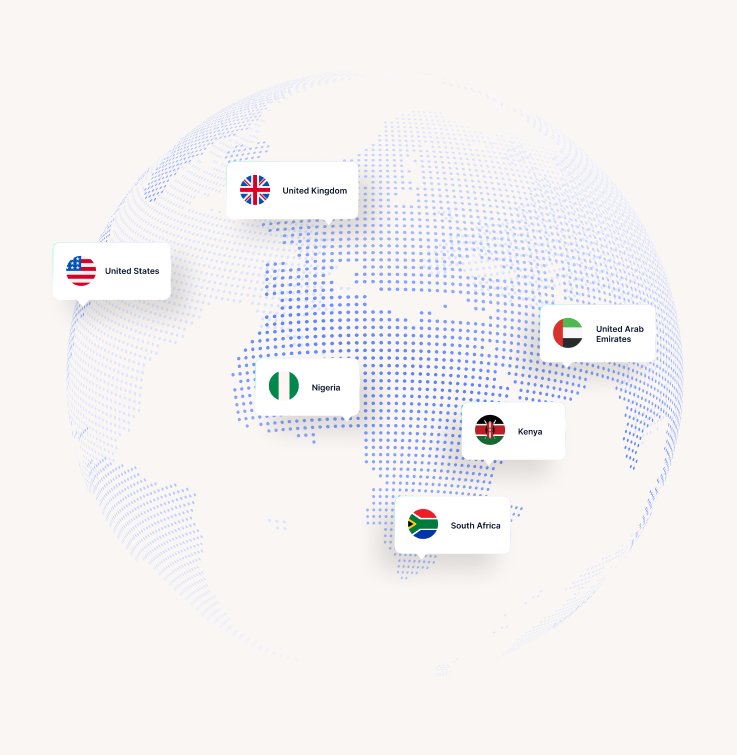
Next steps
Submit initial company details
Compliance and structure review
Kenyan business account opened
FX access and global payments enabled
FAQs
Why open a business account in Kenya?
Kenya is a stable, investor-friendly country and a regional hub within the East African Community, making it an attractive destination for foreign investors and multinational businesses. Establishing a business account in Kenya enhances financial credibility with regulators and partners.
Kenya's advanced banking system, strong digital infrastructure, and international connectivity provide significant benefits for foreign investors and multinational businesses.
Can non-residents open a business account in Kenya?
Yes. Foreign-owned companies and non-resident directors can open a business account in Kenya. Banq Global provides Kenyan business accounts for overseas companies and manages the onboarding and compliance process required for non-resident applicants.
Do I need to be in Kenya to open a business account?
No. The account opening process can be handled remotely. Banq Global removes the need for in-person branch visits that are commonly required by many Kenyan banks, allowing overseas directors to complete onboarding without travelling to Kenya.
Do I need a KRA PIN to open a Kenyan business bank account?
In most cases, yes. A Kenya Revenue Authority (KRA) PIN is commonly required as part of the onboarding and regulatory compliance process. Banq Global will confirm whether a KRA PIN is required for both the company and its directors based on the account structure.
Can a Kenyan business account hold foreign currency?
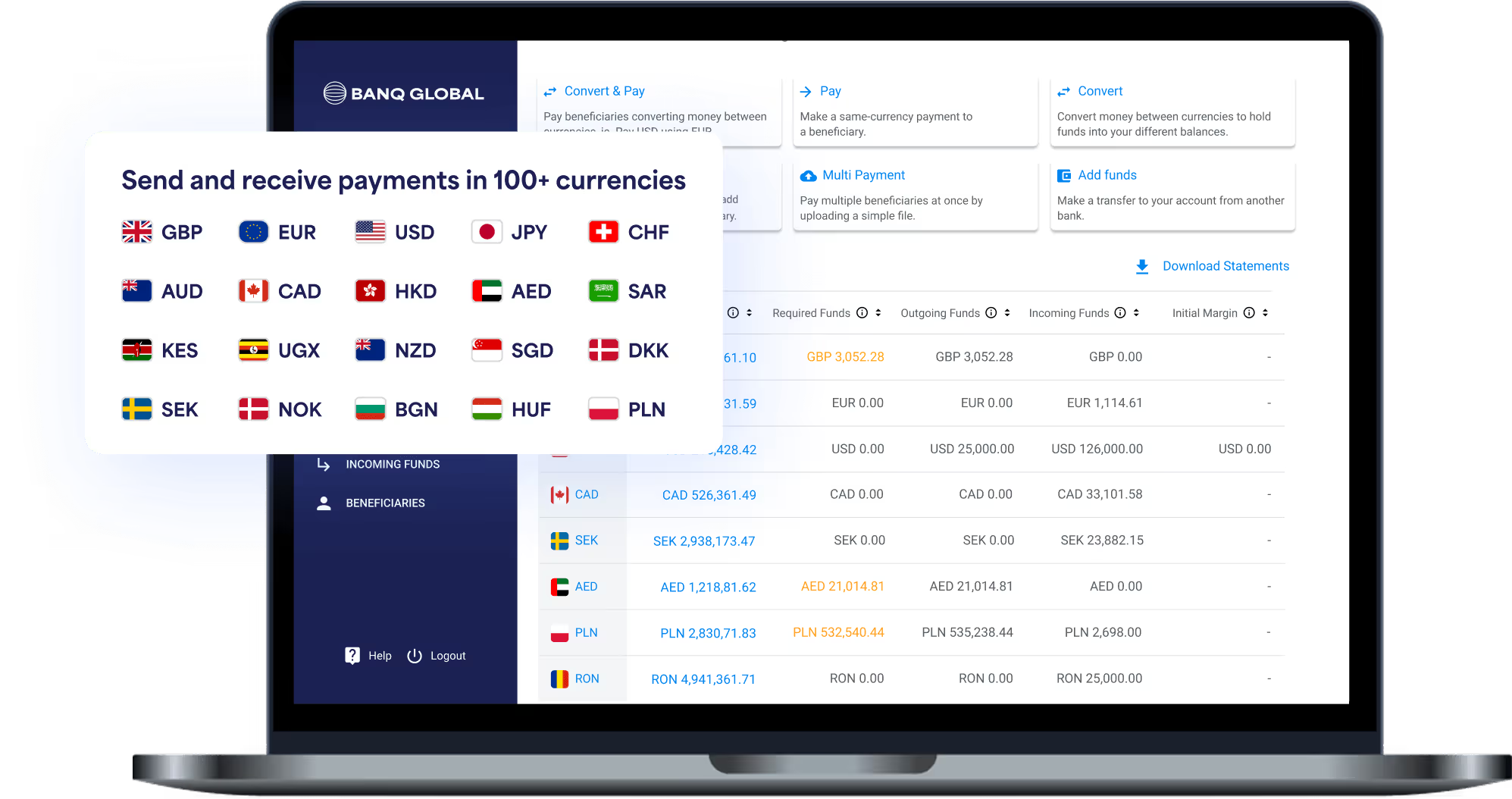
Yes. Kenyan business accounts can include foreign currency account functionality, allowing transactions in 190+ currencies including USD, EUR, and GBP alongside Kenyan Shillings. This supports international payments, investor funding, and cross-border trade.
How do I convert Kenyan Shillings to USD and move money offshore?
Banq Global provides regulated FX access to convert Kenyan Shillings into USD, EUR, GBP and other major currencies. Outbound payments are processed over approved international payment rails, allowing businesses to move funds offshore in line with Kenyan regulations.
Can this account help with trapped funds in Kenya?
Yes. The account is structured to address trapped funds issues by providing FX access and international transfer capability. This allows businesses to convert KES and repatriate funds more efficiently, subject to regulatory requirements.
Can I open a Kenyan business account directly with a local bank?
Although this is possible, many Kenyan banks require local presence, in-person verification, and bank-specific onboarding processes for foreign-owned companies. Banq Global provides the account and manages the compliance and structure to avoid these common limitations.
Can a Kenyan business account be used for trade finance and operations?
Yes. A Kenyan business account supports operational payments, supplier settlements, payroll, and cross-border transactions. Depending on eligibility, it may also support trade finance, working capital, and other financial services.
How can I reduce exposure to Kenyan Shilling (KES) currency fluctuations?
The Kenyan Shilling can be subject to sharp movements, particularly for businesses holding funds locally for extended periods. Banq Global helps reduce this risk by enabling compliant conversion and repatriation of KES, allowing businesses to limit prolonged exposure to local currency volatility.
Can Banq Global support FX planning for businesses trading in Kenya?
Yes. Banq Global supports FX planning for businesses exposed to Kenyan Shilling (KES) movements by combining structured account setups with foreign exchange risk management solutions. Where appropriate, this can include forward contracts and other hedging instruments, alongside planned conversion and international transfer strategies.
This approach helps businesses manage KES exposure proactively, avoid forced conversions when liquidity is constrained, and reduce the risk of value erosion when funds would otherwise remain trapped locally.