Setting Up an SPV in Mauritius
Mauritius generally imposes no capital gains tax, has a standard corporate income tax rate of 15% (potentially reduced to an effective 3% through an 80% partial exemption on qualifying income), and maintains a network of 45 double taxation agreements (DTAs), attracting family offices, private equity and venture capital sponsors, multinational groups and their advisers seeking to establish tax-efficient holding, investment, joint venture (JV) or financing SPVs for international transactions. However, accessing these tax benefits depends largely on choosing the right legal vehicle when setting up an SPV in Mauritius, while successfully operating the SPV also requires opening a working business account that supports its financial transactions and cross-border activities.
What Is an SPV in Mauritius?
A Mauritian Special Purpose Vehicle (SPV) is a separate, ring-fenced legal entity set up in Mauritius for a specific, limited business objective. By creating a distinct liability perimeter, an SPV supports asset isolation and ring-fencing of its assets and obligations from those of its parent company, subject to applicable legal protections.
Depending on its structure, it is governed by the Companies Act 2001, the Financial Services Act 2007 and other relevant legislation, with oversight from the Financial Services Commission (FSC) where applicable.
Common Uses of a Mauritian SPV
Mauritian SPVs are used across various international investment and financing arrangements, including the following common scenarios:
Private equity and investment holding
An SPV acts as an intermediate holding structure between an investment fund and its target company, potentially providing tax treaty benefits. For example, a European private equity fund uses a Mauritian GBC SPV to acquire shares in an Indian technology company.
Real estate acquisition
An SPV holds property investments and may allow investors to exit through a share sale rather than a direct asset transfer. For example, an international consortium establishes a Mauritian SPV to acquire a commercial property in Kenya.
Co-investment/Joint Venture Vehicle
An SPV allows investors to pool capital within a separate liability perimeter, while escrow arrangements can help manage contributions and release funds when agreed transaction conditions are met.
Intra-group financing or treasury company
A multinational company may establish a Mauritian SPV to raise capital and provide loans to its subsidiaries in different countries. This arrangement supports the company's cross-border structuring and intra-group financing, subject to applicable thin capitalisation rules.
Securitisation and project finance
An SPV can hold receivables or project assets separately and raise funds through structured finance arrangements. A debt service reserve account may also be maintained to cover scheduled debt repayments.
Common Legal Structures for Setting up an SPV in Mauritius
An SPV is not a separate company type in Mauritius. Instead, it can be established through different legal structures depending on its investment purpose and regulatory requirements, including:
Global Business Company (GBC)
- Recognised as a tax resident in Mauritius and its central management and control reside within Mauritius.
- Must maintain adequate economic substance in Mauritius, including at least two Mauritius-resident directors, a principal bank account in Mauritius, and ensuring all core income-generating activities and accounting records are managed locally.
- Meeting local requirements qualifies the company for a Tax Residency Certificate (TRC) from the Mauritius Revenue Authority (MRA). This allows the GBC to access a network of over 45 Double Taxation Agreements (DTAs), subject to treaty eligibility requirements and the Principal Purpose Test (PPT).
- May also qualify for the partial exemption regime on eligible income, including certain foreign dividends and interest. Mauritius generally does not impose capital gains tax.
- Selected when the transaction explicitly requires access to Mauritius’s DTA network to optimise cross-border tax treatment.
Authorised Company (AC)
- Generally treated as non-resident for Mauritius tax purposes, assuming management and control sit outside Mauritius.
- Cannot claim benefits under Mauritius's DTA network on the basis of Mauritius tax residence.
- Generally exempt from Mauritius corporate income tax on foreign-source income but may be taxed on Mauritius-source revenue.
- Has a lighter local compliance footprint than a GBC and is not subject to the same Mauritius economic substance requirements. However, it must maintain a registered office and registered agent in Mauritius.
- Selected for pure offshore functionality, risk segregation, or holdings where local treaty benefits are irrelevant.
Specialist Legal Structures
Depending on the investment strategy and transaction requirements when setting up an SPV in Mauritius, businesses may also consider specialist legal structures.
Variable Capital Company (VCC)
Introduced under the Variable Capital Companies Act 2022, a VCC provides an umbrella structure for investment funds, with separate sub-funds and SPVs. It supports fund domiciliation and shared fund administration services. Subject to FSC approval, sub-funds may operate as collective investment schemes, including Professional Funds or Expert Funds.
Protected Cell Company (PCC)
A PCC allows assets and liabilities to be segregated into legally protected cells within a single corporate entity, making it suitable for multiple investment portfolios or SPV-like arrangements, subject to applicable regulatory requirements.
Limited Partnership (LP)
An LP may be used for private equity funds, joint investments and other fund-style structures where partners require flexible ownership and management arrangements, with potential tax transparency depending on the applicable rules.
Documents and Information You'll Need for SPV Incorporation in Mauritius
Requirements for setting up an SPV in Mauritius vary by entity type (GBC or AC) and ownership structure, and usually include:
- Proposed company names, Registrar of Companies application forms and Constitution, where applicable.
- KYC documentation, including identification and proof of address for directors, shareholders and beneficial owners.
- Source of funds evidence, including bank statements or financial records.
- Group structure chart showing shareholders, beneficial owners and ownership percentages.
- Transaction structure diagram, term sheet and shareholders' agreement, where applicable.
- Business plan outlining the SPV's purpose, investments and expected transactions.
- Details of the corporate secretary, registered office and registered agent, as applicable.
- Board resolutions and power of attorney, where required.
- Evidence of economic substance arrangements, including Mauritius-resident directors and local accounting for GBCs.
How to Set Up an SPV in Mauritius: The Process
Setting up an SPV in Mauritius involves five key steps:
Step 1: Choose the Vehicle and Structure
Choose between a GBC and AC based on the SPV's activities, tax residency, treaty access and economic substance requirements.
Step 2: Prepare the Required Documents
Gather the incorporation, KYC, source-of-funds and transaction documents outlined in the previous section.
Step 3: Incorporate and Obtain Regulatory Approval
Apply through an FSC-licensed management company, which coordinates incorporation with the Registrar of Companies (ROC) and submits the regulatory application through the FSC One Online Platform. The ROC issues the Certificate of Incorporation, while the FSC grants a Global Business Licence (GBL) for a GBC or authorisation for an AC.
Step 4: Establish Local Arrangements
For a GBC, appoint at least two Mauritius-resident directors and arrange local accounting and other economic substance requirements.
For an AC, maintain a registered agent in Mauritius and central management and control outside the country.
Step 5: Open a Business Account
Apply to open a business account in the SPV's legal name with a licensed bank in Mauritius or a suitable international account provider. For GBCs, a principal bank account in Mauritius is mandatory, while international accounts can provide additional support for cross-border transactions.
Choosing a Business Account Provider for Your Mauritius SPV Setup
Opening a business account can be more challenging than incorporating an SPV in Mauritius, particularly for structures involving non-resident directors, international shareholders and complex beneficial ownership arrangements. Traditional banks may require extensive due diligence, delaying access to essential banking services.
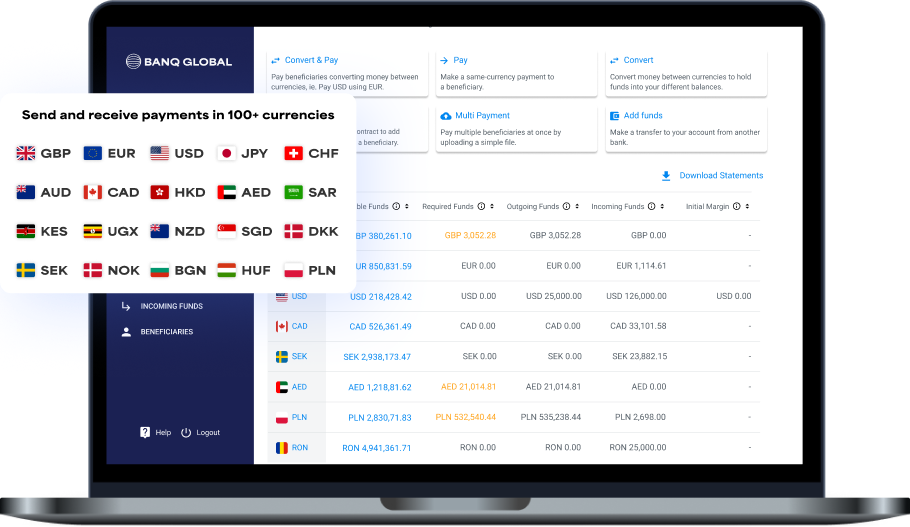
To address these challenges, Banq Global offers entity-named business accounts for Mauritius-registered SPVs, including those with non-resident directors and complex ownership structures. Its services include fully online onboarding, accounts in 20+ jurisdictions, multi-currency payments and competitive foreign exchange (FX) services. Account opening typically takes around five working days after submission of complete documentation, subject to eligibility and compliance checks.
Estimated Timeline for Mauritius SPV Setup
Setting up an SPV in Mauritius depends on whether you choose an AC or a GBC, alongside the time required for business banking in Mauritius.
Authorised Company (AC)
Approximately 1–2 weeks for incorporation and FSC authorisation.
Global Business Company (GBC)
Incorporation and obtaining an FSC Global Business Licence typically take approximately 2–4 weeks. Including bank account opening, the overall setup process may extend to 6–8 weeks or longer, depending on the bank's due diligence and onboarding requirements.
It's important to note here that business account opening may take longer than incorporation and FSC approval, particularly for complex ownership structures, multi-tier shareholding, or specialised activity types. It is best to initiate bank account preparations in parallel with the FSC application rather than sequentially.
Mauritian SPV Setup Costs
Costs of setting up an SPV in Mauritius generally include:
- Incorporation fees payable to the ROC.
- FSC licensing and ongoing annual maintenance charges.
- Management company or registered agent fees.
- Resident directors, registered office, accounting and audit costs (GBC specific).
- Account setup fees and ongoing global transaction charges.
GBCs generally involve higher setup and ongoing costs than ACs because of their licensing and economic substance requirements.
Note: Because corporate fees, compliance costs, and Management Company (MC) service rates fluctuate, you should request a formal, updated fee schedule from an FSC-licensed Management Company before finalising your budget.
Ongoing Compliance Once the SPV Is Set Up
After setting up an SPV in Mauritius, businesses must meet ongoing legal, financial and regulatory obligations depending on their entity type.
- GBCs must retain an FSC-licensed management company, while ACs must maintain a registered agent in Mauritius.
- File required annual returns with the Registrar of Companies (ROC) and update corporate records.
- Submit applicable financial reports to the FSC and tax returns to the MRA.
- GBCs must prepare and submit annual audited financial statements in accordance with applicable accounting standards.
- Maintain AML/CFT compliance by keeping beneficial ownership information and meeting applicable Customer Due Diligence (CDD/KYC) requirements.
- Fulfil CRS/FATCA reporting obligations where the SPV qualifies as a reporting financial institution.
Note that economic substance isn't a one-time test for GBCs. It must be maintained continuously. That is, resident directors must be actively involved, board meetings held and chaired in Mauritius, and accounting records kept in Mauritius.
FAQs
Can a non-resident set up an SPV in Mauritius?
Yes. There is no requirement for the ultimate owner to reside in Mauritius when setting up an SPV in Mauritius. A GBC must appoint at least two Mauritius-resident directors, but beneficial owners, sponsors and investors may be based overseas, subject to applicable regulatory and due diligence requirements.
Should my Mauritius SPV be a GBC or an Authorised Company?
A GBC is generally suitable for international businesses seeking Mauritius tax residency and potential access to the DTA network to reduce withholding tax, subject to eligibility and economic substance requirements. On the other hand, an AC, managed and controlled outside Mauritius, may suit structures that do not require treaty benefits and prefer lighter local compliance obligations.
Can a Mauritius SPV issue debt instruments?
Yes, a Mauritius SPV can issue debt instruments to raise capital for investments or projects, including through structured finance arrangements. These instruments can be listed on the Stock Exchange of Mauritius (SEM) if they meet specific listing criteria. An issuer may issue debt securities privately to a single person or to qualified investors under the Mauritius Securities Act 2005.
Can one Mauritius SPV hold investments in multiple countries?
Yes, a single SPV can hold investments across several jurisdictions, but the treaty benefits available depend on the specific bilateral treaty between Mauritius and each investee country. For some structures, separate SPVs per jurisdiction can be more efficient.
Can a Mauritius SPV benefit from investment protection agreements?
Yes. A Mauritius SPV may benefit from Investment Promotion and Protection Agreements (IPPAs) with partner countries. These agreements can provide legal protections for qualifying cross-border investments, provided the relevant agreement is in force and the SPV meets its eligibility requirements.
Can a Mauritius SPV be used alongside a trust?
Yes. A trust established under the Mauritius Trusts Act 2001 may hold shares in an SPV to support family wealth management, estate planning and investment holding. However, a trust is a separate legal arrangement, not a company.
What is the dissolution process for a Mauritius SPV after exiting an investment?
Once the investment is sold and proceeds distributed, the SPV can undergo formal dissolution. The process involves settling outstanding liabilities, obtaining applicable tax clearance, surrendering its FSC licence or authorisation, and completing the appropriate winding up or strike-off procedure with the Registrar of Companies (ROC).