Polish Business Account for Non-Residents: Complete Guide
Poland’s economy grew by 4.0% year-on-year in Q4 2025 and is expected to reach around 3.7% growth in 2026 (ING analysis), reinforcing its position as a key destination for non-resident business owners seeking access to the European Union. For those operating through foreign corporate structures, establishing a local bank account is often indispensable.
However, opening a Polish non-resident business account is feasible but more complex, owing to the bank's strict compliance checks, detailed KYC procedures, and internal risk policies. In many cases, this includes extensive document verification and a mandatory requirement for physical presence, particularly for higher-risk or multi-jurisdictional structures.
Why Do Non-Residents Need a Business Bank Account in Poland?
Foreign entities need a local business bank account in Poland for several reasons.
- To support company formation and share capital deposits.
- To get access to the EU market and to have smoother domestic transactions.
- To receive and send PLN payments without FX friction.
- To handle daily finances easily, including salaries, suppliers, and bill payments.
- To build trust with local partners and banks.
- To make VAT payments and receive VAT refunds.
Who Can Open a Polish Non-Resident Business Account?
Most foreigners ( both EU and non-eu) are allowed to open bank accounts in Poland, subject to compliance checks by financial institutions. Eligible applicants generally include:
- Non-resident business owners and entrepreneurs
- Foreign-owned companies
- Non-resident directors and shareholders
- Companies with international or complex ownership structures
- Businesses operating in regulated industries
However, final approval depends on nationality, country of residence, source of funds, business activity, and overall risk assessment.
Required Documents to Open A Polish Business Account for Non-Residents
The following documents are generally required to open a bank account in Poland for non-residents.
- Certificate of incorporation and company registration documents
- Articles of association and full business structure
- Passport identification for directors and beneficial owners
- Proof of address in your home country (e.g., utility bill)
- Tax numbers (e.g., tax ID, NIP, REGON, where applicable)
- Detailed description of business activity
- Source-of-funds and source-of-wealth documentation
- Ownership charts and UBO declarations
- Supporting contracts, invoices, or evidence of operations
It is necessary to point out that for non-EU citizens or complex foreign structures, banks may request additional documents. Most importantly, where multiple jurisdictions or layered ownership are involved.
Types Of Business Account Providers In Poland
Both major banks and smaller banks in Poland offer business accounts, but they differ in onboarding requirements, flexibility, and support for foreign entity and complex business structures.
Traditional Banks
Major institutions such as ING Bank Śląski, Santander Bank Polska, and Alior Bank provide full-service banking infrastructure, with strong domestic credibility and full integration with Polish financial systems. However, they often require physical presence, involve lengthy onboarding for non-residents, and apply higher compliance thresholds for complex structures.
Digital / Fintech Providers
Digital providers such as Wise and Airwallex offer streamlined online banking, including faster onboarding, virtual cards, debit card access, and multi-currency functionality. This makes them attractive for businesses seeking speed and operational flexibility. However, they may lack full banking capabilities and may not support regulated or high-complexity business activity, which can limit their suitability for more structured or internationally complex companies.
Specialist Providers
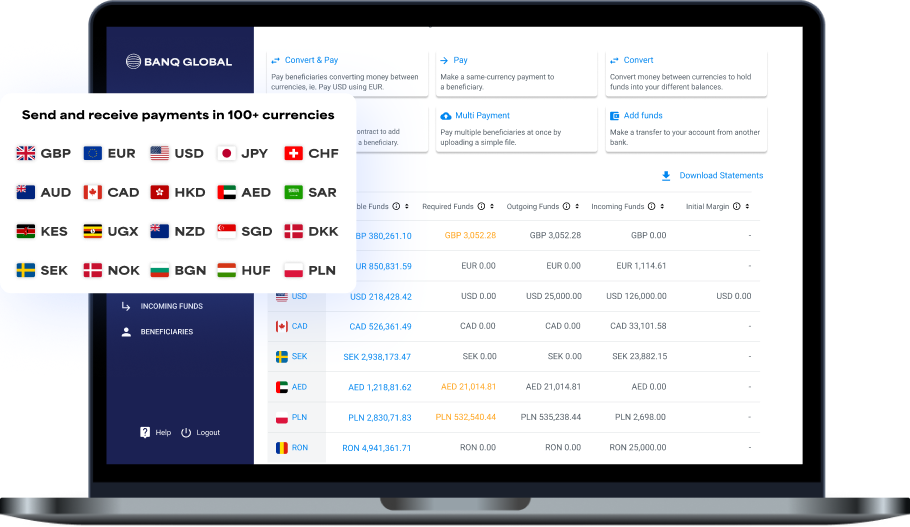
Specialist providers such as Banq Global represent a more convenient option for international structures that face challenges with traditional banks. They offer fully remote Polish bank account opening, without business travel, support for complex ownership and higher-risk profiles, and integrated FX, treasury, and cross-border payment capabilities. In addition, dedicated onboarding and expert support are provided throughout the process. This approach is particularly relevant where traditional Polish banks decline applications due to an elevated risk profile or structural complexity.
Steps to Open A Polish Non-Resident Business Account
Step 1: Pre-Assess Your Structure and Business Model
Before approaching a bank, review your business structure, ownership, and activities. Polish banks assess the legal setup, source of funds, and economic rationale behind your operations. A lack of clear connection to Poland is a common reason for rejection, particularly for non-resident companies.
Step 2: Choose the Right Provider and Account Type
Select a provider based on your operational needs, including multi-currency support (PLN, EUR, USD), international payment capabilities, fees, and online banking features.
Step 3: Prepare Documents and Submit Application
Providing accurate documentation is legally required during the account opening process. Documents in foreign languages must also be translated into Polish by a sworn translator and legalised where necessary. To reduce delays and improve approval chances, ensure all required documents mentioned above are complete and prepared in advance.
Step 4: Attend Bank Meeting (Often Required)
Most traditional Polish banks require a physical meeting to verify identity and finalise the application. Company representatives may need to visit Poland to complete onboarding, sign documents, and clarify the purpose of the account and expected business activities.
Step 5: Complete KYC and Due Diligence
After submission, the bank conducts KYC checks to assess the financial profile of the company, its shareholders, and directors. You may be required to complete detailed questionnaires covering business activities, transaction volumes, and the source of funds.
Step 6: Compliance Review and Decision
The bank’s compliance department at the head office reviews the application in line with EU law, following full KYC (Know Your Customer) procedures, along with AML (Anti-Money Laundering) and UBO (Ultimate Beneficial Owner) checks.
It assesses ownership structure, verifies beneficial owners using the Central Register of Beneficial Owners (CRBR), and evaluates the overall risk profile before approving a Polish non-resident business account.
If the application is rejected, it is closed with no option to appeal. The bank also typically does not disclose the reason for the decision.
Step 8: Sign Agreement and Activate Account
If the application is accepted, the bank invites you to sign the business bank account agreement, often requiring in-person presence. Once the account is activated, the bank will provide you with access to online banking and other credentials.
Realistic Timelines
Depending on the complexity of the business structure and compliance checks, the onboarding timeline may vary. It is
- 2–4 weeks for straightforward EU-based companies.
- 4–12+ weeks for non-resident or multi-jurisdictional structures.
To reduce delays, it is advisable to prepare all required documents in advance and ensure they are complete and accurate.
Multi-Currency Accounts, Foreign Currency Holding and Exchange Rates
After Polish bank account opening, using a multi-currency account to hold PLN alongside foreign currencies such as EUR, USD, and GBP is a strong move for businesses with cross-border activities. Not only does this simplify managing multiple currencies, but it also reduces FX costs and improves overall cash flow while conducting transactions.
To further manage exchange rate exposure more effectively, international businesses may also use hedging and FX tools. For example, use forward contracts to lock in rates or natural hedging to match revenues and expenses in the same currency.
It’s relevant to note that foreign exchange (FX) rates vary significantly across financial institutions. Traditional banks often apply wider spreads, typically 1.5% to 4% above mid-market rates. Whereas, specialist providers offer more competitive pricing and greater transparency for Polish non-resident business account. That is why, selecting the right provider to open a bank account, can significantly reduce foreign exchange costs.
How do International Transfers, SEPA, and Cross-Border Payments Work for Non-Residents in Poland?
With a multicurrency account in place, businesses conduct transactions and transfer funds locally and internationally using specific payment systems in Poland
Receiving PLN via local IBAN
Banks provide a local IBAN right after your Polish non-resident business account is approved. Non-resident comapnies include the Polish IBAN on invoices, and clients in Poland pay using local systems such as ELIXIR or Express Elixir. This makes transactions faster, lower-cost, and more efficient.
SEPA transfers for EUR
To send and receive money in euros, the Single Euro Payments Area (SEPA) is used. It enables businesses to make EUR transfers across the European Union and participating countries as domestic payments. It helps in making transactions faster, lower-cost, and more efficient for cross-border operations.
SWIFT for Global Transfers
To send money outside the SEPA zone or in non-EUR currencies, the SWIFT (Society for Worldwide Interbank Financial Telecommunication) network is used. Banks rely on SWIFT codes (BIC) to identify each other and process payments, often through intermediary correspondent banks. These transfers are slower (3–5 days) and more expensive due to intermediary bank fees.
Bulk payments
To send bulk payments, most providers in Poland offer file upload or API-based tools that allow businesses to process multiple transactions at once, improving efficiency and reducing manual work.
It's important to note that specialist providers generally offer lower fees for international transfers and bulk payments by utilising local banking rails to bypass expensive SWIFT fees.
Compliance, Tax Reporting and FATCA/CRS for Non-Residents
Opening a business bank account in Poland comes with strict compliance checks.
- Non-residents must register for VAT (forms NIP-2/VAT-R) before trading. Once registered, banks provide a mandatory VAT account for the split payment mechanism (required for payments over 15,000 PLN).
- Companies must use the phrase "mechanizm podzielonej płatności" on invoices and list their account on the Whitelist to ensure tax-deductible client payments.
- Non-resident business owners must also confirm tax residency and provide a NIP (Tax ID).
- Under FATCA (for US taxpayers) and CRS (global standards), Polish banks report account data to the National Revenue Administration. This information is then automatically exchanged with international tax authorities to ensure transparency under EU and global laws.
Failing to meet these requirements can lead to payment restrictions or even account suspension.
Post-Opening: Using and Managing Your Account in Poland
Payment Platform Setup
Once your Polish business bank account is operational, link your business account to payment platforms (e.g., BLIK) and marketplaces to facilitate sales.
Payroll and Supplier Payments Setup
To automate payroll and supplier payments, you can use specialised payroll software or an Employer of Record (EOR). Make sure your bank structure supports the "split payment" method.
Monitor FX to Manage Multicurrency Balances
Use your banking dashboard to monitor FX rates and convert funds between sub-accounts to take advantage of favourable rates.
Keep Monitoring Transactions and Compliance Triggers
As banks frequently require updated documentation to prevent breaches of Polish banking laws, which may include reviewing your transaction history for large or suspicious transfers.
Maintain Company and Ownership Records
You must keep your bank informed of any structural changes in your company. If you change owners, directors, or authorised signatories, you must update the National Court Register (KRS) and subsequently notify the bank. Any change in company address must also be reported to the tax office and the bank.
Choosing the Bank with Expert Support
Look for a bank that provides a dedicated English-speaking manager to navigate the complexities of Polish tax law, particularly if you are a non-resident director.
FAQs
Can non-residents open a business bank account in Poland?
Yes, non-residents can open a company account in Poland. However, they are subject to strict compliance and KYC (Know Your Customer) checks. For international companies with complex structures, banks may also require additional corporate documents before approval, which may include UBO (Ultimate Beneficial Owner) details, proof of business activity, and expected financial operations.
Do I need to visit Poland in person?
Traditional banks often require companies to open Polish non-resident business account by visiting a branch in person and signing agreements. However, some banks and fintech providers allow online applications for simple business structure, with video KYC used for identity verification and compliance checks.
How long does it take to open a bank account in Poland?
Opening a bank account in Poland generally takes between one business day (in-person) and 10-14 days (remote/corporate). For individuals with a PESEL number and address, in-branch opening is immediate, while debit cards arrive within 7-10 days. Corporate accounts usually take 2 weeks to 3 months to fully finalise.
What documents are required for Polish bank account opening as a foreigner?
Most foreigners need to submit.
- Certificate of incorporation/company extract
- Articles of association
- Passport IDs for directors and beneficial owners
- Proof of address (directors/company)
- UBO ownership structure
- Source-of-funds documentation
- Business activity description or contracts
- Tax ID numbers (NIP, REGON if applicable)
Can I open an account without Polish residency?
Yes, you can open a bank account in Poland without Polish residency (no residence card or PESEL). However, it is often easier to do so in person at a branch rather than online. You will mainly need a valid passport, and some banks may also request proof of address, such as a foreign address document or a temporary address in Poland.
What are the biggest reasons for rejection (red flags), and how to avoid them?
For Polish non-resident business bank account, the biggest reasons for rejection in 2026 include:
- High-risk business profile or jurisdiction
- Complex or foreign ownership structure
- Documentation errors and non-residency
- Lack of a clear Polish business rationale
- No proof of active business (paper company)
- Slow responses to bank queries or failure of the interview
To reduce the risk of rejection, complete all required documents, choose the right account provider (Banq Global), understand its risk criteria, and clearly explain your company’s connection to Poland.