Luxembourg SARL Incorporations in 2026: New Changes - Everything You Need to Know
The SARL capital reform, enacted under the Law of 18 May 2026, amends the Law of 10 August 1915 on commercial companies by allowing founders to defer payment of the EUR 12,000 statutory minimum share capital for up to 12 months after incorporation. While this has led to headlines suggesting that a Luxembourg SARL no longer requires a bank account before incorporation, the reform is limited in scope and primarily benefits simple cash-funded incorporations subscribing only the statutory minimum share capital. Many holding companies, international groups and more sophisticated investment structures will still require banking arrangements as part of their establishment or funding process, particularly where additional capital, share premiums or more complex ownership structures are involved. Understanding these distinctions is essential when assessing the practical impact of the 2026 SARL reforms.
What Is a Luxembourg SARL?
A Société à Responsabilité Limitée (SARL) is a private limited liability company that combines features of both capital companies (limited liability protection) and partnerships (restricted transfers of shares). It is the most common company form in Luxembourg and is widely used for holding companies, SOPARFIs, acquisition vehicles, family office structures, and operating subsidiaries.
Luxembourg SARL Minimum Share Capital Requirement Prior to 18 May 2026
Before the Luxembourg SARL 2026 changes, a minimum share capital of EUR 12,000 was required, and it had to be fully subscribed and fully paid before the company could be incorporated before a Luxembourg notary. This pre-reform position matters, because the Law of 18 May 2026 changes when the minimum share capital must be paid rather than removing the requirement itself.
In practice, incorporating a Luxembourg SARL followed a fixed sequence built around a blocking account:
- The founders first opened a dedicated bank account known as a blocking account (compte bloqué).
- The EUR 12,000 minimum share capital was deposited into the blocking account, where it was held and could not be accessed or used until incorporation had completed.
- Once the funds were received, the bank issued a blocking certificate confirming that the required capital had been deposited and was being held pending incorporation.
- The blocking certificate was then presented to the Luxembourg notary, and the incorporation could not proceed without it.
- Following incorporation, the notary confirmed completion to the bank, the blocking account was unblocked, and the funds became available to the newly incorporated Luxembourg SARL.
This sequence created the greatest friction for non-residents, holding companies, investment structures, and international groups with non-resident shareholders. For these founders, it typically meant completing banking onboarding, KYC, AML, and source-of-funds reviews before the company legally existed, which could delay the incorporation process.
In simple terms, before the 2026 reform a Luxembourg SARL could not be incorporated until the minimum share capital had first been deposited into a newly opened blocking account and a blocking certificate had been issued by the bank. The Law of 18 May 2026 changes this position for a specific set of incorporations, as set out below.
What Did the Luxembourg Law of 18 May 2026 Actually Change?
To address these practical barriers, Luxembourg adopted the Law of 18 May 2026 (derived from Draft Bill No. 8669). Published in the Official Gazette on 29 May 2026 and effective from 2 June 2026, the reform modernises the Luxembourg SARL incorporation process by changing when the statutory minimum share capital must be paid rather than eliminating the capital requirement itself. The core changes are:
- Payment of the EUR 12,000 statutory minimum share capital may be deferred for up to 12 months after incorporation.
- The deferred payment mechanism applies only to cash contributions.
- While payment is deferred, all shares must still be fully subscribed at the time of incorporation.
- A shorter payment deadline may be specified in the articles of association or deed of incorporation.
- The SARL-S (simplified SARL variant) is also covered by the new regime.
Where the Reform Stops: What Still Requires a Blocking Account
The reform's flexibility is real but narrow. It applies only to the EUR 12,000 cash minimum, which means several common funding arrangements fall outside it entirely and must still be funded in full at incorporation. For cash above the minimum and for share premium, that means a blocking account and blocking certificate; contributions in kind instead require the asset to be transferred and independently valued at incorporation. The three exceptions below determine whether a given Luxembourg SARL incorporation actually benefits from the 2026 changes.
Does the Regime Apply to Contributions in Kind for Luxembourg SARL Incorporations 2026?
No. For a Luxembourg SARL incorporation 2026, the deferred payment regime applies only to cash contributions toward the EUR 12,000 minimum share capital. Contributions in kind are non-cash contributions to share capital, such as assets, intellectual property, receivables, equipment, real estate, or shares in subsidiaries.
These are common in restructuring transactions and group reorganisations, where a parent company may contribute assets or intercompany receivables to a newly incorporated SARL. Any in-kind contribution must be fully completed at incorporation, following the standard rules, including independent valuation where required. The traditional incorporation process therefore applies in full for any SARL with an in-kind element.
Does the Reform Apply to Share Capital Above EUR 12,000?
No, not in full. The reform applies only to the EUR 12,000 statutory minimum share capital. Any share capital in excess of that amount must still be fully paid at Luxembourg SARL incorporation in 2026.
This is particularly relevant for commercial and investment structures, including holding companies, SOPARFIs, acquisition vehicles, family office structures, and other entities that are commonly capitalised above EUR 12,000 for operational or creditor-confidence reasons. For these structures, the practical impact of the reform may be limited because the excess capital remains subject to the traditional funding requirements.
How Does Reform Affect Share Premium Luxembourg SARL Incorporation in 2026?
The limitations of the reform are not confined to share capital above EUR 12,000. Share premium (surplus paid above nominal value) also remains outside the scope of the deferred payment regime and must be fully paid at incorporation. A blocking account and blocking certificate for Luxembourg SARL are required to cover the share premium amount.
Because share premium forms the bulk of injected funding in holding companies, fund vehicles and private equity (PE) structures in Luxembourg, the exception critically undermines the goal of faster incorporations. Even if you use the deferred payment regime for the base capital, you cannot circumvent early-stage Anti-Money Laundering (AML) and Know Your Customer (KYC) banking delays if a share premium is involved. The bank must still process and block the premium funds before Luxembourg SARL incorporation 2026 can proceed.
What is the difference between share capital and share premium in a Luxembourg SARL?
In a Luxembourg SARL, share capital is the fixed nominal base value of issued shares (subject to a EUR 12,000 minimum), locking a portion of equity in the company. Share premium is the extra cash paid above this nominal value. While part of equity, premiums are highly flexible and avoid strict capital reduction laws.
When Luxembourg SARL 2026 Changes Apply: Four Practical Examples
The easiest way to understand the practical impact of the 2026 SARL reform is through a number of common incorporation scenarios. The examples below demonstrate when the Luxembourg SARL deferred share capital regime applies, when it only partially applies, and when the traditional blocking account process remains unchanged across different Luxembourg SARL structures.
Scenario 1: SARL with EUR 12,000 Cash Capital, No Share Premium
A Luxembourg SARL incorporation 2026 funded with exactly EUR 12,000 in cash, no share premium, and no contributions in kind is fully eligible for the deferred payment regime. As the amount corresponds to the Luxembourg SARL minimum share capital, the founders may defer payment for up to the 12-month deferral period permitted by the new rules.
No Luxembourg SARL blocking account or blocking certificate Luxembourg SARL is required before incorporation. This is the narrow category of cash contribution SARL structures that the "no bank account required" headlines accurately describe. In practice, the regime is most relevant to straightforward operational businesses capitalised at the statutory minimum.
Scenario 2: SARL with EUR 50,000 Share Capital
Consider a SARL Luxembourg incorporation funded with EUR 50,000 in cash share capital, with no share premium and no contributions in kind. This structure is only partially eligible for Luxembourg SARL deferred share capital treatment.
The deferred payment minimum share capital rules apply only to the first EUR 12,000. The remaining EUR 38,000 must be fully paid at incorporation, requiring a Luxembourg SARL blocking account and blocking certificate.
While part of the capital qualifies as partially paid shares SARL, the incorporation process still requires traditional banking arrangements before completion.
Scenario 3: SARL Funded Via Contributions in Kind
A Luxembourg SARL incorporation 2026 capitalised through contributions in kind (for example, shares in a subsidiary, an intercompany receivable, or intellectual property) falls outside the scope of the new deferred payment regime. The contribution must be completed at incorporation in accordance with the existing rules.
As a result, group reorganisations, asset transfers, and restructurings using contributions in kind SARL structures remain outside the new regime, and the traditional incorporation process continues to apply in full.
Scenario 4: SARL with EUR 12,000 Capital and EUR 500,000 Share Premium
A Luxembourg SARL incorporated in 2026 with EUR 12,000 in cash share capital and EUR 500,000 share premium may defer payment of the EUR 12,000 share capital under the new rules, but the EUR 500,000 share premium must still be paid in full at incorporation. As a result, a Luxembourg SARL blocking account and blocking certificate remain required for the full share premium amount.
What Does This Mean for Holding Companies, SOPARFIs, and Investment Structures?
This scenario is frequently encountered in SOPARFI Luxembourg, acquisition vehicle Luxembourg, holding company SARL Luxembourg, family office vehicle Luxembourg and structures administered by a fund administrator Luxembourg. Despite the 2026 change, the traditional blocking account process remains necessary in full. The deferred option on the EUR 12,000 is available but largely irrelevant given the premium requirement.
Safeguards and Compliance Requirements Under the New Regime
When utilizing the deferred payment option, SARLs must adhere to specific compliance requirements and safeguards for deferred capital payment designed to protect creditors and third-party counterparties.
- The payment timeline, mechanics, and deferred status of shares must be explicitly set out in the SARL's articles of incorporation.
- The articles of incorporation must also identify which shares are partly paid and to what extent.
- To fulfil transparency requirements applicable to a SARL, partly paid shares must be registered as such in the Luxembourg commercial register (RCS).
- A transfer restriction applies to partly paid shares until the capital has been fully paid up.
- Shareholders with unpaid capital carry ongoing liability exposure. If the company becomes insolvent, founders are personally responsible for the unpaid portions of the capital.
What happens if the deferred minimum share capital is not paid within 12 months?
The 12-month payment period is a strict deadline. Failing to pay capital calls enforced by management within this timeframe may result in forced payment, suspension of shareholder rights, legal action, and potential judicial dissolution of the SARL for non-compliance. The penalties themselves are enforced by the company's management (board of directors) under civil law and the Luxembourg district courts, governed by the Luxembourg Ministry of Justice.
Can Non-Residents Incorporate and Operate a Luxembourg SARL Under the New Law?
Yes. The 2026 law does not introduce any nationality or residency restrictions. Non-resident directors and shareholders can incorporate a Luxembourg SARL as before. For those whose structure qualifies for the deferred payment regime, the removal of the pre-incorporation blocking account requirement may simplify the process. For structures that still require a blocking account, non-residents will often work with a Luxembourg bank, corporate service provider Luxembourg, or legal adviser to coordinate the incorporation process.
Opening a Business Account for Your Luxembourg SARL
For SARLs using the deferred regime, the banking focus moves from pre-incorporation to post-incorporation. Incorporated SARLs still need a business account to operate and to pay down the deferred capital within the 12-month window.
When comparing providers, international businesses should consider factors such as multicurrency capabilities, support for non-resident ownership, online onboarding, and cross-border payment functionality.
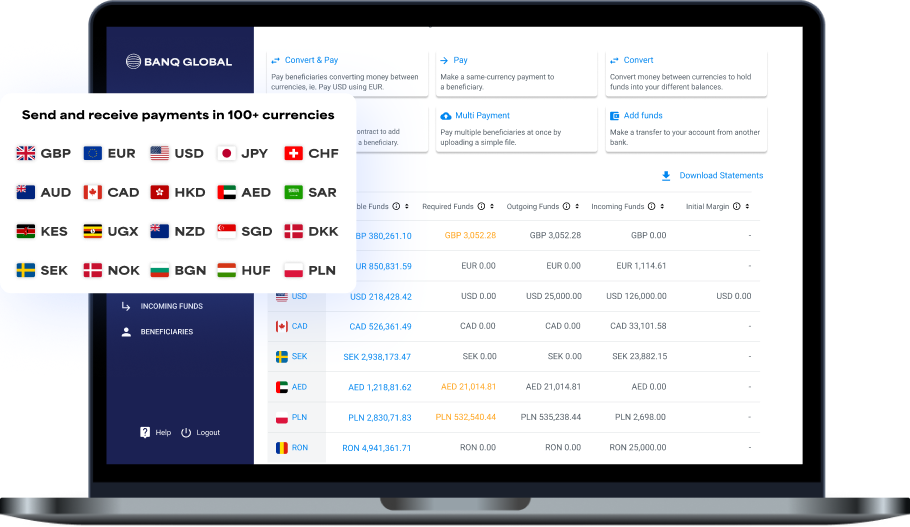
For international SARLs and holding structures with non-resident directors, shareholders, or complex cross-border ownership, specialist account providers such as Banq Global are often better suited than traditional Luxembourg banks.
For international SARLs and holding structures involving non-resident directors, shareholders or complex cross-border ownership, specialist providers such as Banq Global are often able to facilitate onboarding more efficiently than traditional Luxembourg banks. In many cases, this enables a faster account opening process, access to an all-in-one specialised Luxembourg business account with a blocking certificate service, and a more cost-effective banking solution for internationally owned structures.
FAQs
Can I incorporate a Luxembourg SARL without opening a bank account first in 2026?
Yes, but only in limited circumstances.
- The first EUR 12,000 of cash share capital may be deferred for up to 12 months. No pre-incorporation blocking account is required for that amount.
- Share capital above EUR 12,000, share premiums, and contributions in kind remain subject to the traditional blocking account.
What is a blocking account and do I still need one?
A blocking account (compte bloqué) holds share capital before incorporation and is used to obtain a blocking certificate from the bank. Under the 2026 law, this is still required for any amount above the EUR 12,000 minimum, for share premium, and for contributions in kind.
Does Banq Global provide business accounts for Luxembourg SARLs?
Yes. Banq provides specialist business accounts for Luxembourg-incorporated companies, including SARLs and holding structures with non-resident directors or shareholders. Applications are handled online and accounts can be approved within 24 hours of receiving the correct paperwork.
What does it cost to open a business account for a Luxembourg SARL?
Costs vary by provider. Traditional Luxembourg banks typically charge setup fees, monthly account maintenance fees, and per-transaction fees, which can be significant for structures with international payment flows. Specialist business account providers generally offer more transparent pricing with lower FX mark-ups and fewer ancillary charges.
What documents does a Luxembourg SARL need to open a business account?
Requirements vary by provider, but typically include the signed deed of incorporation, the commercial register (RCS) extract, identification for directors and ultimate beneficial owners (UBOs), and proof of registered office. Complex structures with multiple shareholders or cross-border ownership may require additional documentation.
What ongoing compliance requirements apply to a Luxembourg SARL after the 2026 changes?
The 2026 reform does not remove standard corporate compliance obligations. A Luxembourg SARL must continue to file annual accounts with the RCS, submit applicable tax returns, and maintain accurate information in the UBO Register. Deferred capital payments do not affect these ongoing requirements.