With over €5 trillion in assets under management (AuM), Luxembourg is the largest investment fund centre in Europe and the second-largest in the world after the United States. Its versatile toolbox of regulated (UCITS) and alternative (AIFs, RAIFs) fund vehicles offers professional investors and fund managers a range of options for structuring, distributing, and managing investment strategies efficiently.
For general partners, sponsors, and investment professionals, Luxembourg provides the necessary infrastructure, fund banking, and legal frameworks to establish or relocate investment funds effectively.
Why Luxembourg Is a Global Hub for Investment Fund Accounts?
The Grand Duchy of Luxembourg stands out as a premier hub for investment funds, built on solid structural and regulatory foundations rather than mere tax advantages.
Cross-Border Fund Access for Investors
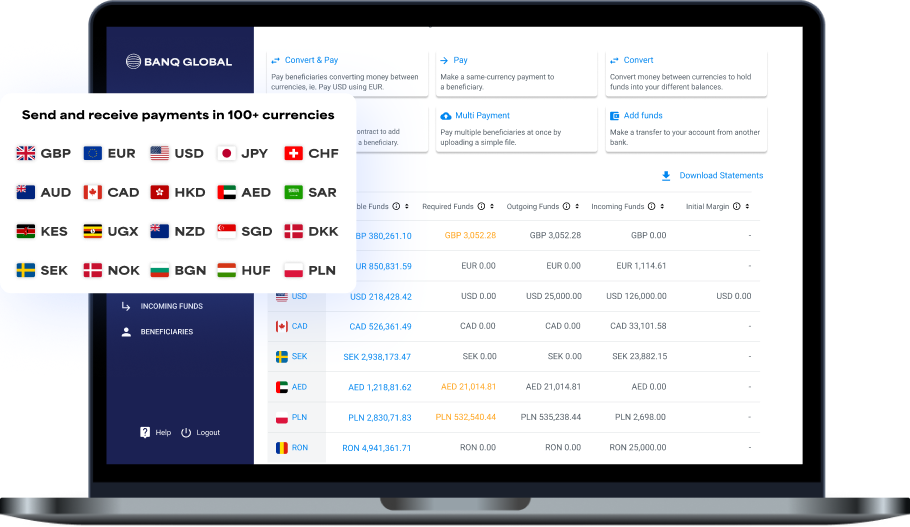
Luxembourg investment funds can be marketed across 80+ countries, allowing fund managers to reach international investors efficiently. Multi-currency bank accounts and secure money transfer services support smooth fund management operations across borders.
Flexible Investment Vehicles and Fund Structures
Luxembourg provides diverse investment vehicles for private equity, real assets, and risk capital. Sponsors and fund managers can choose legal forms like SICAV, SCSp, or FCP to design fund structures and investment strategies that fit investor needs.
Investor-Focused Fund Management Solutions
Luxembourg primarily serves institutional and professional investors, such as pension funds, insurance companies, and family offices. Experienced, multilingual financial service providers ensure compliance, reporting, and operational support for complex fund structures.
Robust Regulatory Framework and Investor Protection
Luxembourg ensures strong investor protection through CSSF supervision, fund oversight, and AML/KYC compliance. Management companies, investment companies, and bank accounts provide reliable support for professional fund management, financial activities, and international investors.
Political and Economic Stability
Luxembourg’s political stability and AAA-rated economy, together with full European Union membership, provide predictability and long-term confidence for international investors, sponsors, and fund managers.
What Are the Main Investment Fund Regimes Available in Luxembourg?
Luxembourg offers a range of fund regimes, not a single fund type. Each regime is designed for different investor profiles, asset classes, and regulatory needs. The key differences between these regimes can be understood in three practical ways:
- Some regimes are designed for retail investors, while others are limited to professional or well-informed investors based on experience and minimum investment size. This determines who is eligible to participate.
- Some structures are directly regulated at the fund level, while others are supervised through the authorised management company or AIFM. This changes how oversight is applied.
- A fund may be formed as a contractual arrangement without legal identity, or as a corporate legal entity such as a public limited company or limited partnership, affecting governance and control.
With these distinctions in mind, we can now look at the main Luxembourg fund regimes and how each structure is used in practice.
UCITS (Undertakings for Collective Investment in Transferable Securities)
UCITS is the EU’s most widely used retail-focused, highly regulated fund regime, with over 37,000 funds managing €14.6 trillion in assets across Europe.
Its key regulatory requirements include:
- No more than 10% of assets in a single issuer; combined holdings above 5% capped at 40%.
- Maintaining sufficient liquid assets to meet redemption requests.
- Actively monitoring portfolio risk; derivatives only for hedging or efficient management.
- Designed for retail investors across the EU.
To follow these regulatory requirements, UCITS funds need frequent subscriptions and redemptions and strong oversight from depositaries and administrators, which is not possible without robust banking arrangements and a proper investment account setup in Luxembourg.
Alternative Investment Funds (AIFs)
AIFs are non-UCITS collective investment vehicles widely used in Luxembourg for professional and well-informed investors, covering strategies such as private equity, venture capital, private credit, real assets, and infrastructure.
Key regulatory requirements include:
- Funds must operate under the AIFMD framework, with obligations applied at the manager level.
- Monitoring and managing illiquid or alternative assets with appropriate risk controls.
- Transparent reporting and governance for investor protection.
- Structures must align with professional investor eligibility and legal forms, e.g., SCSp or SICAV.
By 2024, there were over 10,000 alternative investment funds domiciled in Luxembourg, with total assets under management of around €2.445 trillion, according to the latest CSSF reporting figures.
Specialised Investment Fund (SIF)
SIFs are regulated funds designed for well-informed investors in Luxembourg, offering more flexibility than UCITS while maintaining fund-level supervision. They are ideal for investors seeking alternative or illiquid assets and customized strategies.
Key requirements include:
- Must be marketed to well-informed investors, typically with a minimum investment of €100,000 or proof of expertise.
- Can be structured in various legal forms, such as SICAV, SCSp, or FCP.
- Fund-level supervision allows more flexibility than UCITS, including broader asset types and derivative usage making them ideal for institutional focused strategies.
Reserved Alternative Investment Fund (RAIF)
RAIFs are alternative investment funds not directly authorised or supervised at the fund level by the CSSF, offering speed and flexibility while remaining fully compliant under Luxembourg law.
Key features and requirements include:
- Managed by an authorised AIFM, providing regulatory oversight without direct fund-level supervision.
- Can invest in a wide range of eligible assets, including private equity, private credit, and alternative strategies.
- Must be marketed to well-informed investors, typically meeting minimum investment thresholds or demonstrating professional expertise.
It is important to note that RAIFs benefit from faster structuring and broader investment options, but they have less direct fund-level supervision, which also makes the investment fund account setup more dependent on the authorised manager, depositary, and compliance controls required by CSSF expectations.
SICAR (Investment Company in Risk Capital)
SICARs are corporate investment vehicles designed for high-risk, high-return strategies such as venture capital, growth equity, and select private equity in Luxembourg.
Key features include:
- Formed as a corporate entity, providing legal personality and governance flexibility.
- Can invest in venture capital, growth equity, or private equity strategies.
- Must be marketed to well-informed or professional investors, ensuring participants understand the inherent risks.
Unlike SIFs or RAIFs, SICARs are purpose-built for risk-focused investments, rather than offering broader flexibility for alternative assets.
Part II UCIs (Part II Funds)
Part II UCIs are regulated Luxembourg funds designed for non-retail investors who do not require the full UCITS framework. They offer a flexible alternative for investors seeking broader investment opportunities without the strict restrictions of UCITS.
Key characteristics include:
- Regulated at the fund level, providing strong oversight.
- Broader investment scope than UCITS, allowing exposure to a wider range of assets.
- Marketed to professional or well-informed investors, rather than retail clients.
Part II UCIs act as a middle ground between UCITS and AIF structures, combining the benefits of fund-level supervision with more flexibility for specialized investment strategies.
Which legal forms are used by Luxembourg investment funds?
In Luxembourg, fund regimes sit on top of legal forms, which determine the fund’s legal entity, governance, and investor rights.
SICAV / SICAF (corporate entities)
Used for UCITS and institutional AIFs, providing legal personality, governance, and investor protections.
Fonds Commun de Placement (FCP – contractual form without legal personality)
Suitable for collective investment and flexible fund management, often for professional investors.
Special Limited Partnership (SCSp – partnership)
Favoured for private equity, venture capital, and risk capital strategies, offering GP/LP style governance and alignment between general and limited partners.
Note: Fund regime sets the rules and investor type, while legal form defines structure, management, and rights.
How Fund Regime Choice Affects Banking and Compliance?
The type of fund—UCITS, SIF, RAIF, SICAR, or Part II UCI—affects how banks manage accounts in Luxembourg and how the investment fund account setup is assessed. It also depends on whether the fund is regulated at fund level or manager level and the investor profile.
Because of this, subscriptions, redemptions, money transfers, and capital flows are handled differently. Administrators and depositaries rely on the bank to manage payments, approvals, and monitoring. Therefore, banking is part of the regulatory framework, not a separate decision, ensuring smooth operations and strong investor protection.
Tax Efficiency for Luxembourg Investment Funds
Tax efficiency in Luxembourg is primarily structural rather than rate-driven. Most regulated investment funds established in the Grand Duchy are not subject to standard corporate income tax or net wealth tax; instead, certain vehicles apply a low annual subscription tax calculated on net assets, helping to reduce overall costs and fees for investors.
In addition, Luxembourg maintains one of Europe’s most extensive double tax treaty networks, which can lower withholding tax on cross-border dividends, interest, and capital gains — particularly important for funds investing across multiple jurisdictions, including Europe, Asia, and Latin America.
Fund managers can also utilise flexible fund structures such as the special limited partnership (SCSp) and the reserved alternative investment fund (RAIF), both designed to optimise tax treatment and enhance cost efficiency for alternative investment strategies. Careful planning and professional advice ensure that these tax advantages are fully realised while keeping fees and operational costs under control.
How Is Regulatory Oversight Applied to Luxembourg Investment Funds Setup?
The CSSF supervises Luxembourg funds, ensuring compliance at the fund level (when applicable) and the management company/AIFM level. Funds must follow strict AML/KYC rules, including due diligence on managers, investor onboarding, and ongoing monitoring of transactions. These safeguards protect investors and reinforce Luxembourg’s reputation as a reliable domicile for alternative investment funds and professional investment vehicles.
How Do You Open or Move a Fund Bank Account in Luxembourg?
To open a new bank account, the fund manager needs to align the setup with the fund’s regime and legal form. For existing funds moving their banking after redomiciliation or restructuring, banks review the fund structures, investor profile, and expected transaction flows.
Whether you are opening a new bank account or moving an existing investment fund, extensive documentation is required for Luxembourg investment funds setup. This helps banks monitor control, investor risk, and fund transactions, while ensuring compliance with the regulatory framework, anti-money laundering rules, and investor protection standards.
Compliance Essentials And Luxembourg Investment Fund Setup
Compliance essentials are central to how banks and service providers support Luxembourg investment funds. Oversight by the Commission de Surveillance du Secteur Financier, together with the AIFMD regime and the UCITS framework, shapes how each investment fund, alternative investment fund, and investment company is assessed and onboarded.
In practice, this means strict AML/KYC checks on fund managers, verified investor onboarding, and ongoing monitoring of money transfers and transaction activity across fund structures and bank accounts to reduce risks such as money laundering and terrorist financing. Therefore, banks and online account providers follow a conservative, compliance-first approach while setting up investment fund accounts in Luxembourg.