SOPARFI Luxembourg: Holding Company Guide & Tax Regime
In today’s global business environment, the ability to structure cross-border investments efficiently is imperative for companies operating across multiple jurisdictions. Businesses require frameworks that combine flexibility, scalability, and alignment with international tax law and corporate tax standards. For corporate counsel, tax advisors, and in-house finance teams, selecting the right structure is a key strategic decision.
The Luxembourg SOPARFI is one such option, widely used by family offices, multinational groups, and private equity as a special purpose vehicle for cross-border holding, financing, and investment of financial assets. It operates under a recognised tax regime, providing access to EU directives, 80+ double tax treaties, and up to 100% participation exemption on qualifying dividend income and capital gains, provided certain conditions are met.
What is SOPRFI in Luxembourg?
Soparfi stands for “société de participations financières”, the French term for a financial holding company. It is not a new type of company but a tax regime, i.e., a set of tax rules applied to a Luxembourg SA, SARL, SCA or SAS whose purpose is the holding and financing of corporate participations, often used across different sectors as a special purpose vehicle (SPV) to implement group investment policies. This SOPARFI tax regime was first introduced under Luxembourg law through the 24 December 1990 Grand-Ducal regulation, implementing the EU Parent-Subsidiary Directive (90/435/EEC, recast as 2011/96/EU).
Is SOPARFI Holding Company Regulated by the CSSF?
As a fully taxable, unregulated vehicle, SOPARFI follows standard corporate tax rules in Luxembourg but operates without direct regulatory oversight from the Commission de Surveillance du Secteur Financier (CSSF). It is unregulated so long as it does not engage in activities that trigger financial sector laws, such as raising capital from the public as an alternative investment fund (AIF).
Legal Forms a SOPARFI Tax Regime can Take
The Luxembourg SOPARFI, a financial holding and intellectual property rights company, can take a broad range of legal forms, which may include
Société à responsabilité limitée (SARL).
A private limited company, typically used by a single shareholder or a small group of shareholders, with a minimum share capital of EUR 12,000.
Société anonyme (SA)
A public limited company, requiring a minimum share capital of EUR 30,000, is suitable for a wider base of shareholders or future listing.
Société en commandite par actions (SCA)
A limited company structured as a partnership by shares, often used by private equity (PE) or venture capital (VC) managers to retain control.
Société par actions simplifiée (SAS)
A flexible company structure offering greater governance flexibility, suitable for entrepreneurs, joint ventures, and investors who require high contractual freedom.
It's important to note here that the choice of legal form depends on governance and shareholder structure, not tax, as the SOPARFI tax regime applies equally to all.
The Luxembourg SOPARFI Tax Regime in 2025
Under the Budget Law for 2025 (Loi du 20 décembre 2024), a SOPARFI remains fully taxable and subject to the standard corporate tax framework. It includes corporate income tax (CIT), municipal business tax (MBT), and net wealth tax (NWT). However, SOPATFI may benefit from the participation exemptions regime and IP regime, making Luxembourg a popular choice for international groups.
What is the Effective Tax Rate for a SOPARFI in 2025?
As of 1 January 2025, Luxembourg has reduced its corporate income tax (CIT) rate to 16%, resulting in an effective rate of approximately 17.12% after applying the 7% solidarity surcharge.
16% (CIT) × 1.07 = 17.12% (effective tax rate)
When the municipal business tax (MBT) of 6.75% (for Luxembourg City) is added, the aggregate tax rate is approximately 23.87%, although this may vary depending on the municipality.
CIT + solidarity surcharge + MBT = 23.87%
What is the Net Wealth Tax Position for a SOPARFI Luxembourg in 2025?
Luxembourg previously applied a fixed EUR 4,815 minimum net wealth tax (NWT) for companies holding mainly financial assets (such as SOPARFIs). From 2025, this rule has been replaced by a graduated scale based solely on the total balance sheet.
- EUR 535 for balance sheets up to EUR 350,000
- EUR 1,605 for balance sheets between EUR 350,001 and EUR 2,000,000
- EUR 4,815 for balance sheets exceeding EUR 2,000,000
Normal NWT remains 0.5% up to EUR 500M net value and 0.05% on the portion exceeding EUR 500M.
When Does VAT Apply to a SOPARFI (Pure vs Mixed Holding)?
A pure holding company SOPARFI that only holds financial assets and earns dividend income is generally not subject to VAT and does not need to register. However, if the SOPARFI carries out commercial activities (providing management or support services to group companies) then it may be treated as a mixed holding company and assessed on a case-by-case basis. In such cases, the SOPARFI holding company must register for VAT and charge the standard 17% rate, one of the lowest in the EU.
Participation Exemption: Capital gains, Dividends and Liquidation
The participation exemption allows qualifying inbound dividends, capital gains, and liquidation proceeds to be 100% tax-exempt in line with the EU Parent-Subsidiary Directive, provided certain conditions are met.
What Conditions Must be Met for the SOPARFI Luxembourg Participation Exemption to Apply?
- The participation must represent at least 10% of the share capital or meet a minimum acquisition price of EUR 1.2 million (for dividends received and liquidation) or EUR 6 million (for capital gains).
- The participation must be held for at least 12 months (uninterrupted period), or there must be a commitment to hold the participation for 12 consecutive months.
- The parent company must be a fully taxable Luxembourg SOPARFI.
- The subsidiary must be Luxembourg based, or a company resident in another EU country or a non-EU company subject to a comparable level of corporate tax (effective rate of at least 8% from 2025).
What is the Tax benefit of Opting Out of the Participation Exemption?
From the 2025 tax year, a SOPARFI holding company may opt out of the participation exemption regime (and the 50% exemption on dividend income) when eligibility is based solely on the €1.2M/€6M acquisition price threshold. Furthermore, this option is applied annually and on a per-investment basis.
This waiver allows holding companies to treat such income as included in the tax base and gives investors greater flexibility to use tax losses that would otherwise expire. However, it may reduce the overall tax benefit (withholding tax & double tax treaties) of the participation exemption regime, leading to a higher effective tax burden in some cases. So it’s best to take specialist advice before deciding.
Are Outbound Payments From a SOPARFI Subject to Withholding Tax?
Luxembourg City applies a 15% domestic WHT on dividend paid by a SOPARFI, whereas interest, royalties, and liquidation proceeds are not subject to any withholding tax. To benefit from a 15% withholding tax exemption on dividends under Article 147 LIR, the shareholder must meet the same qualifying conditions outlined above.
Even where aforementioned conditions are satisfied, the application of the tax exemption remains subject to anti-abuse rules (ATAD GAAR & PPT), which act as the final gatekeepers. Under these rules, if an arrangement is deemed "not genuine" or its main purpose is strictly a tax advantage, the Luxembourg tax authorities may deny the tax-exempt treatment under applicable tax law.
Intellectual Property (IP) Holding Through a SOPARFI Tax Regime
Software-driven groups often structure an IP-holding SOPARFI alongside the operating SOPARFI Luxembourg to manage and optimise IP-related income. This setup helps them to benefit from the Article 50ter LIR regime in force since 2018 and aligned with the OECD nexus approach.
Tax Advantages
It offers the following tax advantages for income derived from qualifying intellectual property rights.
- 80% of net income derived from qualifying IP assets is exempt from corporate income tax (CIT), resulting in an effective tax rate (ETR) below 5% as compared to the standard corporate tax rate of over 20%.
- 100% NWT exemption on qualifying IP assets, reducing the holding costs for significant IP portfolios.
Qualifying IP assets
These include patents, utility models, supplementary protection certificates (incl. paediatric extensions), plant breeders' rights, orphan drug designations and copyrighted software.
Non-qualifying IP assets
These include trademarks, domain names and brand-related intangibles.
Eligibility Requirements
To benefit from the Luxembourg IP regime in 2026, SOPARFI must satisfy specific operational and reporting requirements centred on the OECD Modified Nexus Approach, i.e.,
- Detailed expenditure tracking per asset
- Income derived from genuine R&D activities
- Application of the Nexus Ratio
The formula to find the Nexus ratio = qualifying expenditure × 1.3total expenditures
Substance Requirements for Setting Up a SOPARFI Luxembourg
A SOPARFI Luxembourg is not a “brass-plate” company and must demonstrate real economic substance to access business tax benefits under EU directives and tax treaties. The SOPARFI should have
- Luxembourg-resident management
- Qualified directors
- Regular board meetings in Luxembourg
- A registered office
- Local accounting and adequate resources.
Although the proposed ATAD 3 Unshell Directive was withdrawn in 2025, its principles continue, and entities without real activity may still face challenges in accessing tax benefits. In addition, BEPS Pillar 2 introduces a 15% minimum effective tax rate for multinational enterprises, which may further reduce the overall tax advantages of SOPARFI structures. It can be said that structuring a SOPARFI requires a genuine Luxembourg presence, including real decision-making and operational activity, rather than relying only on a registered address or service provider.
SOPARFI Tax Regime vs other Luxembourgian vehicles
SPF (Société de Patrimoine Familial)
Designed for private wealth holding, with no commercial activities and no access to tax treaties; suitable for passive asset management by individuals.
RAIF (Reserved Alternative Investment Fund)
A fund vehicle for professional investors, requiring an AIFM and offering a faster setup than traditional regulated funds.
SICAV (variable capital) / SICAF (fixed capital)
Collective investment vehicles used for pooling investor capital, typically established under UCI Part II or SIF Law.
SCSp (Special Limited Partnership)
A flexible, tax-transparent vehicle commonly used in private equity and venture capital structures.
When a SOPARFI makes sense (and when it doesn’t)
When a SOPARFI Luxembourg Makes Sense (and When It Doesn't)
A Luxembourg SOPARFI is an attractive option for holding companies looking to manage cross-border investment and optimise tax advantages, but it is not always the right structure.
Use a SOPARFI Tax Regime When:
- You are holding equity in subsidiaries across EU countries or jurisdictions with double tax treaties.
- You need active holding and financing of group companies.
- Access to tax treaties and EU directives (e.g., the Parent-Subsidiary Directive) is important.
- You want to benefit from the participation exemption on dividends, capital gains, and liquidation proceeds.
- You plan to centralise group financing or use the entity as a special purpose vehicle (SPV) to implement investment policies.
- You are structuring intellectual property rights alongside operating entities.
- You are planning future exits where the capital gains exemptions matter.
- There is a single or limited shareholder group, and there is no need for fund features.
Avoid a SOPARFI Holding Company when
- You are a private individual or family office looking only to manage personal financial assets (stocks or convertible bonds) without engaging in commercial activities (choose SPF).
- You are pooling third-party investor capital (use investment funds or other fund vehicles).
- The structure cannot meet substance requirements or comply with anti-abuse rules.
- The group is too small for the tax benefits to outweigh ongoing corporate tax and compliance costs (EUR 15,000–40,000+ per year, depending on substance and service providers).
Banking Options to Set Up a SOPARFI Luxembourg
Setting up a SOPARFI holding company involves more than just incorporation. While the company itself can be established within a few weeks, opening a bank account often takes longer and can become the main bottleneck in the process. Banks typically treat holding companies as elevated-risk by default, especially where there are non-resident UBOs or complex group structures.
Luxembourg offers three banking options, each differing in its requirements, timelines, and suitability.
Traditional banks
Traditional Luxembourg banks such as BIL, Spuerkeess, and BGL BNP Paribas offer strong capabilities, including full local clearing, established treaty knowledge, and custody services. However, onboarding for an SOPARFI with non-resident UBOs and complex group ownership routinely takes 8–16 weeks. They also impose minimum balances and fees designed for established medium- to large-sized corporate groups. The document load is extensive, requiring group structure charts, source-of-wealth files for each UBO, and certified translations. For an established Luxembourg group with local substance, they are often the right answer.
Mass-Market Digital Banks
Digital providers such as Revolut Business and Wise are built for operating SMEs and freelancers rather than holding structures. Most decline holding-company applications outright or restrict functionality where accepted, and they typically offer a limited or no Luxembourg local IBAN. While they provide rapid onboarding (days to weeks) and lower fees for FX and cross-border transfers, they offer no support for treaty-relief processes and are not designed to handle complex investment structures or group-level treasury. They are best suited for passive holding companies, SPVs with low transaction volume, or rapid capitalisation needs, but are not a serious option for a SOPARFI’s main account.
Specialist Providers
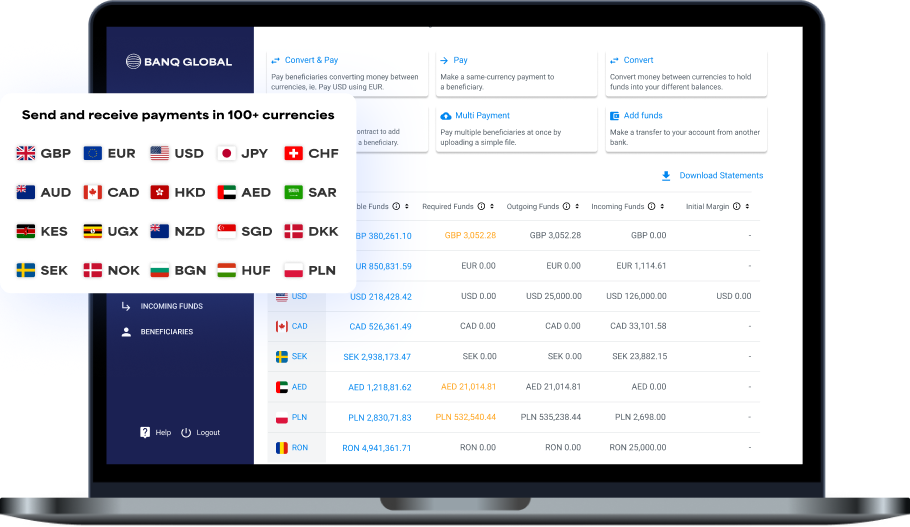
Specialist providers such as Banq Global bridge the gap between traditional and digital solutions by providing bespoke services purpose-built for non-resident directors, complex ownership structures, private wealth holding and group-level treasury needs. With features such as local Luxembourg IBANs, full SEPA and SWIFT access, and support for over 130 currencies, making them a strong option for SOPARFIs with subsidiaries in multiple countries and centralised operations. Moreover, end-to-end online onboarding and strategy-led document review position them ideally for SOPARFIs holding high-value financial assets, high-net-worth structures, and those requiring bespoke family office services.
Steps to Set up a SOPARFI Tax Regime
- Choose the legal form and share capital by deciding between a private limited company (minimum €12,000) or a public limited company (minimum €30,000), with most foreign investors choosing a PLC for a SOPARFI.
- Reserve the company name and prepare KYC/AML documents for shareholders and directors.
- Open a temporary bank account or use a notary escrow account to deposit the share capital and obtain the blocking certificate.
- Sign the Articles of Association before a Luxembourg notary and arrange publication in the Official Bulletin.
- Register the company with the Luxembourg Trade and Companies Register to obtain the company number.
- Register beneficial owners with the Register of Beneficial Owners (RBE) within one month.
- Obtain a tax number from the ACD and register for VAT if needed, depending on the activities of the SOPARFI.
- Complete the operational setup by activating the bank account. Put transfer pricing in place for group transactions, and set up intercompany agreements based on how the SOPARFI Luxembourg will be used to hold and finance group investments.
FAQs
Can a non-resident own and direct a SOPARFI?
Yes, non-residents can fully own and direct a Luxembourg SOPARFI, as there are no residency or nationality requirements for qualifying shareholders or directors. But to access tax benefits, the SOPARFI must have effective management in Luxembourg, including local directors, a registered office, and local decision-making. Banq Global supports non-resident shareholders in setting up and operating Luxembourg structures, including assistance with opening bank accounts.
Does a SOPARFI need a business permit in Luxembourg?
A SOPARFI that only holds and manages participation (pure holding activity) does not require a business permit. However, if it engages in commercial, industrial, or broader financial activities beyond passive holding, it must obtain a business permit from the Ministry of the Economy.
What documents are required to open a Luxembourg account for a SOPARFI?
- Constitutional documents (articles of association, RCS extract, RBE filing)
- Full group ownership chart up to ultimate beneficial owners
- ID and proof of address for all UBOs and directors
- Source-of-funds and source-of-wealth evidence
- Expected activity profile and tax residency certificates.
- Translations may be required for non-French/German/English documents.
How long does it take to set up a SOPARFI and open a bank account?
If all the required documents are in place, company registration takes 1 to 3 weeks. The main delay is usually opening the bank account. Traditional banks often take 8 to 16 weeks, while specialist providers (Banq Global) onboard within a few days to two weeks for well-prepared files, especially for companies with non-resident shareholders.
What ongoing compliance does a SOPARFI face?
- Filing annual financial statements with RCS.
- Submitting annual tax returns: CIT, MBT, and NWT.
- Filing VAT returns (if the SOPARFI carries out commercial activities as a mixed holding)
- Updating beneficial owner information (RBE) within 1 month of any change
- Holding an annual general meeting (AGM)
- Complying with ATAD 3 / DAC6 reporting, where applicable
- Undergoing a statutory audit, if the company meets 2 out of these 3 conditions, i.e., balance sheet > €4.4 m, turnover > €8.8 m, or > 50 employees.