Opening a Business Account in the Netherlands: Everything You Need to Know
The Netherlands is a premier European gateway, offering a strong double tax treaty network, with bilateral treaties spanning over 90 countries and a 100% participation exemption that makes it ideal for holding structures and regional headquarters. Yet, opening a business account in the Netherlands as a foreign company is often the most significant operational hurdle, as banks operate under strict mandates from the Dutch Anti-Money Laundering and Anti-Terrorist Financing Act (Wwft). For international groups, this causes severe friction. Compliance teams look for "substance" and economic rationale in the Netherlands, meaning that letterbox entities, unclear ultimate beneficial owners (UBOs), and non-resident directors require extended underwriting.
Benefits of Opening a Business Account in the Netherlands
Opening a business account in the Netherlands is not a strict legal mandate, but it is a vital operational necessity if you plan to do business in the Netherlands.
Dutch (NL) IBAN As a Commercial Necessity
While EU regulations strictly prohibit IBAN discrimination (forcing someone to use a local account), foreign (Non-NL) IBANs routinely cause automated payment rejections in Dutch corporate accounting systems. Suppliers, landlords, and notaries rely on automated bookkeeping, and a foreign IBAN invites manual reviews and delays.
Access to iDEAL
iDEAL is the dominant payment method in the Netherlands, used for over 73% of e-commerce transactions. This system is entirely unavailable to businesses without a Dutch bank account.
VAT and Tax Practicalities
The Dutch Tax Administration (Belastingdienst) links VAT refunds and tax correspondence directly to your bank account records. Using a foreign bank account to pay local taxes or receive large VAT returns often flags your transactions for manual anti-money laundering (AML) or Know Your Customer (KYC) compliance checks, resulting in unnecessarily frozen or delayed funds.
Multi-Currency Capability
For holding structures and international groups routing cross-border flows through a Dutch entity. A multi-currency Dutch account allows you to route cross-border flows without repeatedly converting in and out of Euros (EUR). It drastically cuts the overhead and FX (foreign exchange) costs for international corporate transactions.
When is a Business Account Mandatory in the Netherlands?
A Dutch business account becomes mandatory when
You Don't Have a SEPA IBAN Account.
If you live in a country outside the SEPA Zone, you will not have a SEPA IBAN account to use for your business in the Netherlands. In this situation, you have to open a Dutch IBAN account (NL prefix) in the name of the business or entrepreneur with a bank located in the Netherlands.
Your Legal Structure Requires One.
BVs and NVs are legally required to maintain a dedicated business account in the company name. For an Eenmanszaak or VOF, a separate business account is not legally required, but it is strongly recommended because the Dutch Tax Administration expects a clear separation between business and personal finances, and mixing the two can increase customer due diligence (CDD) scrutiny.
You Need to Deposit Share Capital for KVK Registration.
Before completing BV formation, Dutch notaries typically require a Dutch IBAN (NL prefix) to issue a deposit statement of the share capital before executing the incorporation deed. For international founders, this creates a sequencing problem because banks often require KvK registration before opening a business account in the Netherlands. In this situation, you may need a pre-incorporation account or a provider that can issue an IBAN for a BV "in formation". Planning your banking and notary timelines can help avoid delays.
What is the KVK, and Why is it Required?
The KVK (Kamer van Koophandel) is the Netherlands Chamber of Commerce. Every business operating in the Netherlands must register with the KVK and receive a KVK number as a result. This registration is a prerequisite for opening a business account: all Dutch banks and specialist providers require a current KVK extract as part of the application.
How Dutch Business Banks Assess Applications?
Under the Wwft (Wet ter voorkoming van witwassen en financieren van terrorisme), all financial providers are legally required to conduct rigid CDD (Customer Due Diligence) and KYC (Know Your Customer) checks on every applicant. The compliance assessment is broken down into four distinct tiers:
Founder & Director Profile
Firstly, banks assess the background of the founders and directors, including their experience, residency status, and involvement in other businesses. Non-resident directors and applicants connected to higher-risk jurisdictions often face enhanced scrutiny.
Company Structure & Activity
Secondly, account providers evaluate the company structure, ownership complexity, nature of business activity, and countries of operation. Holding structures, multi-layer ownership chains, cross-border payment flows, e-commerce, trading, and crypto-related activities typically receive additional review.
Substance & Local Connection
Thirdly, providers look for evidence of local substance, such as a Dutch business address, physical operations, local customers, suppliers, or other connections to the Netherlands. Strong local ties generally make onboarding easier.
Compliance Readiness
Lastly, Dutch banks evaluate how prepared you are for AML and KYC requirements, including the clarity of your source of funds and origin of capital. Incomplete answers, missing documents, or unclear information often lead to silent rejections.
However, rejection by a Dutch bank is not a verdict on the business itself. It often reflects the bank's own risk appetite, which may not be designed for non-resident directors, holding structures, or complex international ownership arrangements.
What Documents Do You Need to Open a Business Account in the Netherlands?
Documentation requirements for opening a business account in the Netherlands vary by provider, but the core set is consistent across all. Banks and account providers use these documents to verify the business, identify its directors and UBOs, and understand how the company operates.
Company Documents
- For most businesses, providers will request a KVK registration extract and proof of the registered business address.
- BV and NV companies are typically required to provide their articles of association, deed of incorporation, register of shareholders, and a UBO register excerpt.
- For VOF and CV structures, banks commonly request a partnership agreement and identification details for all partners.
- Established companies may also be asked to provide approved annual accounts.
It's important to understand one thing clearly: if the company's visiting address is shielded in the KVK register, this should be disclosed early in the application process. Some providers will not proceed without an independently verifiable visiting address.
Personal Documents
- All directors and UBOs are generally required to provide a valid photo ID and proof of address as part of KYC and CDD checks.
- Non-resident directors typically undergo additional identity verification and may be asked to provide source-of-funds documentation and a business plan.
What is the NVB Quick Scan, and should I use it before applying?
The NVB Quick Scan is an online tool provided by the Dutch Banking Association (NVB) that helps foreign entrepreneurs assess their eligibility for a Dutch business bank account before approaching a bank. It can help identify potential onboarding challenges related to company structure, ownership, residency status, and business activities, making it a useful first step for international founders and non-resident directors before opening a business account in the Netherlands.
Dutch Business Account Options in the Netherlands
There are three main banking options available to businesses in the Netherlands: traditional banks, digital banks, and specialist account providers.
Traditional Dutch Banks
Traditional banks such as ING, ABN AMRO, and Rabobank provide full-service accounts with lending facilities, overdrafts, and access to domestic payment rails. However, they typically assess local substance requirements (Dutch business address or evidence of physical operations), and may expect at least one resident director, making them better suited to established corporations and companies with a strong Dutch presence. Compared with other options, onboarding can be time-consuming for foreign entrepreneurs, typically taking 2 to 8 weeks from the point an application is accepted for review. This is not a guarantee of approval, but rather a timeline for assessment. Rejection rates are also higher for businesses with non-resident directors, holding structures, or complex ownership arrangements.
Digital Providers
Digital providers such as bunq, Revolut Business, and Wise provide faster application and onboarding procedures for opening a business account in the Netherlands as compared to traditional banks. They offer multi-currency support and faster cross-border transfers, making them attractive for internationally active businesses. However, their automated KYC processes work best for simple structures and frequently reject or delay applications involving complex ownership chains, holding structures, multi-layer UBO chains, or non-EU ownership. Moreover, they are well-suited for day-to-day transactions but may not offer credit facilities, lending, or advanced treasury services.
Specialist Providers
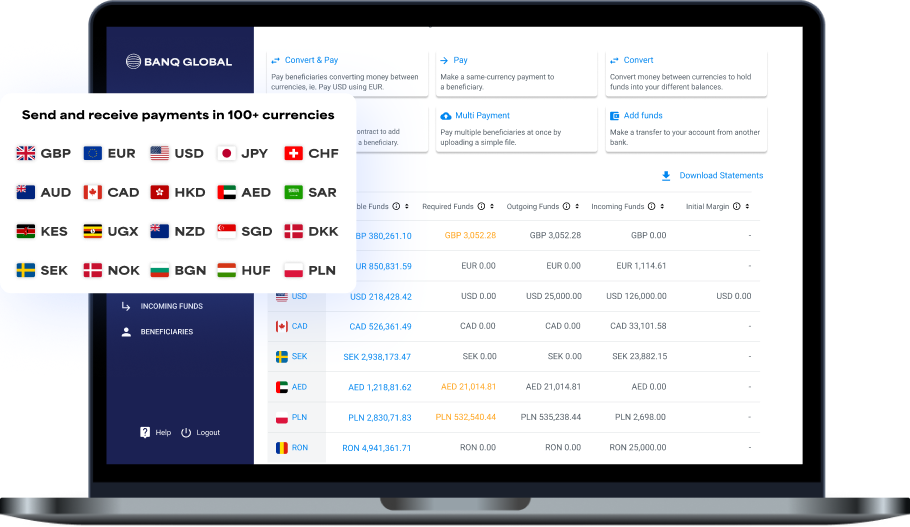
Specialist account providers such as Banq Global are designed for international businesses that fall outside the risk tolerance of traditional and digital banks. They offer 100% online onboarding and support non-resident directors and shareholders from more than 190 countries. Eligible applications can be approved within 24 hours, providing access to a Dutch IBAN (NL prefix) in the company name, SEPA payment rails, SWIFT payments and a multi-currency business account (130+ currencies). As a result, they are often a suitable option for international businesses, holding structures, and complex ownership arrangements. However, unlike traditional banks, specialist providers generally do not offer lending facilities, overdrafts, or cash deposit services.
What Non-Resident Directors and Foreign-Owned Companies Need to Know Before Opening A Business Account in the Netherlands
A non-resident, in this context, is defined as a director or shareholder who is not registered at a Dutch residential address. This profile is typical for international holding structures, family offices and foreign-owned operational BVs. While Dutch law does not strictly prohibit non-residents from opening a business account in the Netherlands, strict banking compliance presents practical barriers.
- KVK registration is mandatory regardless of where directors are based. The company must be registered before any bank application begins.
- By Dutch law, all Ultimate Beneficial Owners (UBOs) holding a 25% or greater stake must be identified, verified, and registered. Banks cross-reference this information closely during due diligence.
- Dutch banks heavily scrutinise applications to ensure the company has a legitimate connection to the Dutch economy, rather than functioning as a shell entity.
Foreign investors setting up complex entities can utilise the Netherlands Foreign Investment Agency (NFIA). The NFIA offers free support services and introductions to Dutch banks, which serve as a credibility signal during your application process.
FAQs
Can you open a Dutch business account for non-residents in the Netherlands?
There is no legal restriction on non-resident directors or shareholders holding a Dutch business account. The Netherlands' business bank account requirements are practical, like those of Dutch banks. Apply thorough KYC and CDD under the Wwft and typically expect evidence of local substance or a resident director.
Can a holding company or SPV open a Dutch business account?
Yes. However, these group structures require enhanced due diligence, as banks will assess the full ownership chain and request documentation for corporate shareholders and UBOs. Traditional and digital providers often decline such applications, while specialist providers are generally better equipped to support the process of opening a business account in the Netherlands.
How long does it take to open a business account in the Netherlands?
At traditional Dutch banks, the NVB-published estimate for foreign entrepreneurs is typically 2 to 8 weeks from the point an application is accepted. Digital providers can be faster for simple structures. Specialist providers such as Banq can approve eligible applications within 24 hours, with the full process completed online.
How much does it cost to open a Dutch business account?
Costs vary by the provider you choose.
- Traditional banks charge a monthly fee plus transaction costs
- Digital providers typically operate tiered plans
- Specialist providers charge fees that reflect the level of onboarding support and compliance work involved.
Is Banq regulated, and are funds protected?
Yes. Banq Global operates through FCA-authorised partners.
- Business account services are provided by Modulr FS Limited (FRN 900573).
- Currency services are provided by Currencycloud (FRN 900199).
- Client money protection is achieved through safeguarded, ring-fenced accounts held at regulated banks.
What ongoing compliance applies after opening a Dutch business account?
Dutch banks and payment providers must carry out periodic account reviews under the Wwft. This typically involves a document refresh every one to three years and potential requests for updated UBO information if the business profile changes. Companies must also keep their KVK registration current and maintain accurate UBO register entries. Non-compliance with either can affect account standing.