Managing Naira FX Risk: A Corporate Treasury Guide for Businesses Operating in Nigeria
The naira lost roughly 70% of its value between 2023 and early 2025 following the unification of Nigeria's foreign exchange market, falling from around ₦460/$1 to peaks exceeding ₦1,600/$1 by early 2025. Ten Nigerian listed companies collectively recorded ₦2.17 trillion in FX losses, while P&G, GlaxoSmithKline, and Kimberly-Clark cited foreign exchange conditions as contributing factors in their exits.
Reforms since 2023 have improved price discovery and market liquidity, while the CBN has reported clearing the verified US$7 billion FX backlog. Exchange-rate conditions also became more stable through 2025. However, FX liquidity and execution times can still vary between banks and transactions, while naira volatility continues to make FX risk management in Nigeria a critical treasury function for CFOs, treasury managers, and finance leaders at international businesses that generate significant naira inflows, typically USD 500,000 or more per month.
Why Nigeria Is a Particularly Challenging FX Environment
A combination of currency, regulatory, and market factors makes Nigeria's foreign exchange (FX) environment more complex than that of many emerging markets.
Severity of Naira Depreciation
Nigeria has experienced significant naira devaluation (70%) following the Central Bank of Nigeria's (CBN) June 2023 foreign exchange market unification reforms. This has led to higher import costs, increased foreign debt values, and lower profit repatriation for international businesses.
Limited USD Access in Nigeria
CBN manages FX allocation through authorised commercial banks and other licensed dealers. During periods of USD scarcity, hard currency in Nigeria may be difficult to access, causing delays for businesses and individuals trying to pay for imports or access foreign exchange.
Official and Parallel Market Rate Gaps
Gaps between the official Nigerian Foreign Exchange Market (NFEM) rate and parallel market rates have periodically been significant. This spread creates regulatory, tax, and compliance challenges for businesses that rely on informal foreign exchange channels to obtain hard currency in Nigeria.
Regulatory Changes
To improve price discovery and market transparency, the Central Bank of Nigeria introduced the Electronic Foreign Exchange Matching System (EFEMS) in November 2024 CBN circular, centralising spot NGN/USD interbank FX trading through Bloomberg BMatch. The framework is designed to strengthen price discovery, transparency, governance, regulatory reporting and counterparty risk management in the Nigerian FX market.
Managing these challenges begins with effective FX risk management in Nigeria. The first step is identifying the foreign exchange (FX) risks affecting your business.
The Three Types of Foreign Exchange Risk in Nigeria
FX risk for international businesses operating in Nigeria falls into three distinct categories: transaction risk, translation risk, and economic risk. Each type of risk affects businesses differently and requires a different FX risk management approach in Nigeria.
Transaction risk
It is a short term exposure that arises when NGN receivables or payables change in value between the invoice date and final settlement because of exchange rate movements. It primarily affects businesses that invoice in naira or require foreign currency, such as USD, to pay suppliers, turning expected profit margins into losses if the naira weakens before payment. For example, a payment agreed at ₦1,200/USD and settled at ₦1,500/USD represents a 20% loss in USD terms.
Translation risk
It is an accounting exposure that arises when a multinational company translates the financial statements of a foreign subsidiary (like a Nigerian branch) into the parent company's functional currency (like USD or GBP) for group reporting.
This Nigerian subsidiary reporting process can result in significant FX translation losses during severe naira devaluations. Rapid naira depreciation can also cause sudden changes in mark-to-market (MTM) values for open foreign currency positions, affecting profit-and-loss statements.
Economic risk
It is a long-term strategic exposure affecting a company's overall market value, future cash flows, and competitive positioning due to a permanently weaker local currency. It forces businesses that rely on imported raw materials to face permanently higher operating costs and adjust their local pricing power.
Practical Tools for Managing Naira FX Exposure
The following FX risk management strategies in Nigeria can help businesses manage naira FX exposure and reduce the impact of currency volatility, depending on the type of foreign exchange risk they face. The most appropriate option should be discussed with an authorised dealer bank or treasury adviser.
FX spot transactions
It involves converting NGN to USD at the current NGN-USD exchange rate in the Nigerian Foreign Exchange Market (NFEM), making them useful for immediate foreign currency conversion needs. The key operational point is using an authorised dealer with sufficient market liquidity and the capacity to execute the transaction efficiently.
FX Forward Contracts
These contracts are a common currency hedging tool that helps businesses hedge naira risk by locking in an exchange rate today for a currency exchange on a set date in the future. Available forward and derivative tenors depend on the instrument, provider and underlying exposure, with three- and six-month forwards among the possible tenors for businesses managing predictable future USD payment needs.
Natural Hedging
This FX risk management strategy in Nigeria involves matching NGN revenue with NGN costs to reduce net exposure. Businesses that can invoice in USD for Nigerian work or source inputs locally reduce net FX exposure structurally. Natural hedging primarily helps reduce economic risk by lowering long-term dependence on exchange rate movements and can also reduce transaction risk.
Domiciliary Accounts
FX domiciliary accounts (single foreign currency accounts) help businesses manage naira exposure by allowing exporters to retain a portion of their export proceeds (subject to the applicable rules) and receive inward remittances from foreign partners or investors for authorised payments. This avoids converting foreign currency into naira and back into USD, providing a legitimate USD float within Nigeria's regulatory framework. Banks typically require invoices, SWIFT payment records, and proof of services before approving outward payments.
To effectively implement these FX risk management strategies in Nigeria, international businesses and multinational companies need reliable access to USD through Nigerian Foreign Exchange Market (NFEM) framework managed by the Central Bank of Nigeria (CBN).
How to Access USD in Nigeria for Effective FX Risk Management
The following are the main official routes for obtaining USD in Nigeria and managing NGN-USD exchange rate exposure.
Form M For Imports
Form M is the mandatory import declaration used for physical goods imported into Nigeria through the formal trade system. It is required irrespective of value and whether or not payment is involved, and is processed through an authorised dealer bank. It typically requires a proforma invoice, insurance certificate, product catalogue or technical description, and any applicable regulatory approvals, such as SONCAP or NAFDAC. Current guidance provides an initial validity of 360 days for general merchandise and 720 days for plant, machinery and equipment..
Form A For Services
Form A is the regulatory application mechanism for eligible service-related payments through Authorised Dealer Banks, with FX obtained through the applicable NFEM process. Businesses use Form A for eligible transactions such as service payments, royalties and management fees. Applications are submitted electronically through the Trade Monitoring System and require supporting documentation appropriate to the transaction, which may include invoices, tax documentation and applicable regulatory approvals or clearances.
Specialist FX and Payment Providers for Faster Regulated Access
Licensed fintechs provide an alternative route to access USD by sourcing foreign currency from export proceeds, inward remittances, and other legitimate market participants. Businesses must complete KYC/AML checks in Nigeria and provide supporting invoices or transaction documentation to comply with applicable CBN and SEC Nigeria regulatory requirements.
Building a Nigeria FX Risk Management Strategy
International businesses and multinationals operating in Nigeria should not wait until they need USD to manage their cash. Instead, they should actively plan and adopt a proactive cross border treasury management approach in Nigeria to reduce currency risk and manage ongoing FX volatility.
Systematic FX Conversion Policy
Establish a rule-based FX conversion policy that defines when and how much operational cash should be converted into foreign currency. Holding large NGN balances for extended periods can crystallise devaluation losses, making planned conversions more effective than ad hoc decisions.
Commercial Invoicing Strategy
Where commercially feasible, invoice Nigerian clients in USD rather than NGN. This shifts transaction risk to the customer and reduces exposure to naira volatility, although it depends on commercial bargaining power and regulatory requirements.
Separate Export Proceeds from Operating Cash
Keep export proceeds and other foreign currency receipts in dedicated FX domiciliary accounts rather than converting them immediately into NGN. This preserves hard currency for imports, supplier payments, and other authorised foreign obligations.
EFEMS Compliance and Reporting
Ensure treasury processes comply with the Electronic Foreign Exchange Matching System (EFEMS) requirements. Since interbank FX transactions must be reported within 10 minutes of execution, internal documentation, approvals, and audit trails should support timely reporting.
Capital Importation and eCCI Compliance
International businesses should comply with applicable NIPC investment requirements and obtain an Electronic Certificate of Capital Importation (eCCI) through an authorised dealer bank after bringing foreign capital into Nigeria. An active eCCI evidences the original importation of foreign capital and supports the investor’s ability to repatriate attributable capital, profits/dividends and eligible payments through authorised channels. It does not itself guarantee FX availability or a specific exchange rate.
Multi-Currency Account Structure
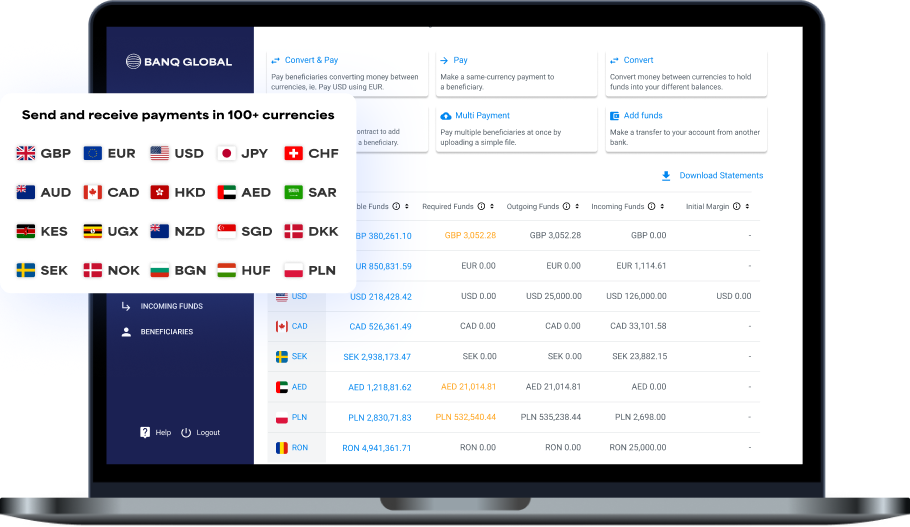
Maintain a multi-currency account through providers such as Standard Chartered Bank Nigeria (Straight2Bank), RMB Nigeria, and Banq Global that supports both NGN and USD to improve visibility across local and foreign currency balances. This enables corporate treasury teams in Nigeria to monitor liquidity, manage foreign currency exposure, and make faster funding and payment decisions.
Common FX Risk Management Mistakes International Businesses Make in Nigeria
International businesses operating in Nigeria often compound financial losses and compliance exposures by making structural foreign exchange (FX) risk management mistakes amid ongoing Naira (NGN) volatility.
Holding Large NGN Balances
Expecting rate recovery ignores the structural devaluation direction of the Naira, which historically compounds losses rather than reversing them.
Using Parallel Market Rates
Relying on unofficial market rates for financial planning creates severe compliance risks alongside inaccurate financial modeling.
Leaving Exposures Unhedged
Failing to utilize available FX forward contracts and spot conversion tools from Central Bank of Nigeria (CBN) authorized dealers is an avoidable choice rather than a market constraint.
Using the Wrong Banking Partner
Selecting a financial institution with limited FX liquidity or cross-border transaction capabilities can make USD transactions slower or more difficult to execute.
Delaying Domiciliary Accounts
Failing to set up a domiciliary account early misses the opportunity to safely retain and deploy FX proceeds within Nigeria's legal and regulatory framework.
FAQs
Why has the naira lost so much value and will it stabilise?
The naira experienced major depreciation against the US dollar following the June 2023 FX market unification,which collapsed Nigeria's multiple FX windows, including the NAFEX window, into a single market. For effective Nigeria FX risk management, businesses should plan for continued volatility, as future stability will depend on CBN FX policy, oil revenues, and Nigeria's hard currency earnings.
How does credit risk in Nigeria differ from foreign exchange risk?
Credit risk in Nigeria is the risk that a customer, supplier, or financial institution fails to meet its payment obligations. FX risk arises from movements in the NGN-USD exchange rate. International businesses operating in Nigeria should manage both risks separately using appropriate treasury, credit, and foreign exchange risk management policies.
Can businesses use interest rate hedging or portfolio hedging in Nigeria as FX risk management tools?
No. Interest rate hedging protects businesses against changes in borrowing costs, while portfolio hedging is primarily used to manage investment portfolio risk. Neither is a primary tool for managing foreign exchange risk in Nigeria. Businesses exposed to naira volatility typically use FX forward contracts, spot transactions, natural hedging, and treasury policies to manage foreign exchange risk.
What is a domiciliary account and how does it help with FX risk?
A domiciliary account is a foreign-currency bank account held within Nigeria. Businesses receiving USD, GBP or EUR inflows can hold a portion of FX earnings in the account and use those funds for authorised payments without going through a formal FX application each time. It provides a legitimate USD float within Nigeria's regulatory system.
Why do some sectors struggle more than others to access USD in Nigeria?
CBN FX allocation and manufacturing FX priority previously influenced how businesses accessed foreign currency in Nigeria. That is no longer the current framework. Under NFEM, FX operates on a willing-buyer, willing-seller basis, with access depending on factors such as market liquidity, transaction size, documentation and the authorised dealer. Licensed FX aggregators may also provide regulated options for eligible cross-border payments.
What changed for FX transactions in Nigeria after the 2024 CBN reforms?
Following the 2024 Central Bank of Nigeria reforms, FX transactions saw the removal of interbank spread caps alongside relaxed Bureau De Change (BDC) rules in February, followed by mandatory electronic matching and strict 10-minute reporting rules in November. These updates made all foreign exchange activities fully traceable through official channels.
What changed for international oil companies under Nigeria’s 2026 CBN FX rules?
In March 2026, the CBN revised foreign exchange rules affecting international oil companies (IOCs), removing previous cash-pooling restrictions and giving IOCs greater flexibility to repatriate eligible export proceeds through Authorised Dealer Banks. The change further eased how qualifying oil-sector companies manage and repatriate foreign currency earnings from Nigeria.