Banking for DIFC and ADGM Holding Companies and Family Offices in the UAE
By H1 2026, the Dubai International Financial Centre (DIFC) reached 10,018 registered companies and 1,408 family-related entities, while Abu Dhabi Global Market (ADGM) reported 3,986 operational entities. This growth reflects the appeal of both financial free zones for holding companies, SPVs, investment structures and family offices, supported by 100% foreign ownership, independent common law jurisdictions and established financial ecosystems.
However, establishing an entity does not automatically make the process of opening a bank account in DIFC or ADGM straightforward. Account providers must follow Central Bank of the UAE requirements and the country’s wider AML/CFT framework when conducting customer due diligence. The extent of these checks for DIFC and ADGM entities depends heavily on the chosen corporate framework, its underlying activities and its operational footprint.
What DIFC and ADGM Holding Companies and Family Offices Are, and Why Banking Differs
DIFC and ADGM holding companies and family offices are specialized corporate and private wealth structures used to hold assets, manage investments, and handle succession. How these entities are established and operate in DIFC and ADGM directly affects their banking requirements.
Corporate Vehicles: ADGM vs. DIFC Structures
Both DIFC and ADGM offer distinct corporate vehicles, including passive holding structures and active operating companies.
Passive Vehicles (ADGM SPV vs. DIFC Prescribed Company)
ADGM describes an SPV as a passive holding company used to isolate financial and legal risk by ring-fencing assets and liabilities. It cannot conduct operational business or hire staff, and applicants must demonstrate an appropriate connection to ADGM, the UAE or the GCC under its nexus requirement.
A DIFC SPV, or Prescribed Company (PC), is its equivalent passive counterpart. Qualifying categories include GCC persons, DIFC registered persons and authorised firms, while other applicants may establish a Prescribed Company subject to the applicable Corporate Service Provider (CSP) requirements.
Active Vehicles (Operational holding company & Active Enterprise)
Unlike passive SPVs, active holding structures can perform operational and group functions.
- In ADGM, a holding company may manage subsidiaries and conduct permitted group activities, such as group oversight, treasury and administrative services.
- In DIFC, an Active Enterprise can be used as a holding company or managing office for proprietary investments and can maintain office space and employ staff.
Family Wealth Structuring
The structural approach to family wealth management and private banking varies depending on the number of families served, regulatory requirements and minimum net assets.
Single Family Office (SFO) vs. Multi-Family Office (MFO)
- In DIFC, the Family Arrangements Regulations 2023 provide the framework for family offices. A Single Family Office (SFO) serves one family, while a Multi-Family Office (MFO) provides services to multiple families. Where an MFO carries out regulated financial services, authorisation from the Dubai Financial Services Authority (DFSA) may be required.
- In ADGM, an SFO manages the financial and personal affairs of a single family and does not require financial services permission. An MFO serves multiple families and, where it provides regulated financial services, requires authorisation from the Financial Services Regulatory Authority (FSRA), typically under a Category 4 licence.
What are the minimum wealth requirements for family offices in DIFC and ADGM?
DIFC’s Family Arrangements Regulations define the Minimum Net Asset Requirement as an aggregate net asset value of USD 50 million, while ADGM requires minimum family net assets of USD 10 million for a Single Family Office. Meeting the applicable asset threshold relates to eligibility under the respective family-office framework and does not guarantee bank account approval.
Why Banking Access Is Harder Than Company Formation for These Corporate Structures
Accessing banking for DIFC and ADGM holding companies and family offices can be more complex than company formation in the UAE for several reasons:
Regulatory and Activity Variations
DIFC and ADGM structures differ in their activities, sources of funds and regulatory status. Banks therefore assess operating companies, passive SPVs, holding companies and family offices differently, making banking access more complex than company formation.
For example, an SFO manages the wealth of a single family rather than external clients and may not require the same financial services authorisation as firms managing money for third parties. Banks may therefore need to establish:
- What the SFO does and how it manages family assets.
- Whose assets are being managed.
- How the family wealth was generated.
- What registration, exemption or authorisation applies to the SFO.
- Whether regulated activities are involved and, where applicable, what activities the entity is authorised to conduct.
Lack of Operational Footprint
Passive holding companies & SPVs may have no regular trading income, employees or customer payments, with funds instead coming from dividends, investments or underlying assets. This can make their business and funding profile less straightforward for banks to assess, which may lead to requests for additional documentation, such as:
- Ownership or asset structure charts.
- Details of underlying subsidiaries, investments and the jurisdictions in which they operate.
- Audited financial statements or trade licenses of revenue-generating subsidiaries.
Unusual Transaction Patterns
Unlike operating businesses with predictable invoice-based inflows and outflows, an SPV or family office may remain dormant for months and then make a high-value transaction for an asset acquisition. Banks therefore need to understand these expected transaction patterns during onboarding, including the purpose, value and source of funds, which can require additional due diligence before account approval.
Complexity in Ownership and Control
Layered and multi-jurisdictional structures can make it more difficult for banks to establish who ultimately owns or controls an entity. Where ownership passes through several companies or jurisdictions, banks may require enhanced due diligence (EDD), additional ultimate beneficial owner (UBO) verification, source of funds (SoF) evidence and source of wealth (SoW) evidence.
Non-resident directors and shareholders can add another layer of due diligence. Banks may conduct additional identity, beneficial ownership and tax-residency checks, including CRS and FATCA UAE requirements where applicable. Depending on the bank and applicant profile, non-residents may also face additional identity verification or in-person onboarding requirements, making opening a non-resident business account in the UAE more time-consuming.
These banking challenges in DIFC or ADGM cannot simply be bypassed by using a personal account, making a dedicated business account for UAE holding companies and family offices indispensable for their corporate and compliance needs.
What DIFC and ADGM Holding Companies and Family Offices Need From a Business Account
Key business account requirements for these structures include:
Support for Passive Holding and Wealth Structures
Holding companies and family offices are designed for asset protection and wealth preservation rather than high-volume daily trading. Their business accounts therefore need to accommodate low-velocity, high-value transaction patterns rather than the transaction patterns typically associated with SME trading businesses.
Multi-Currency Capabilities
DIFC and ADGM entities often involve international businesses and asset management across different jurisdictions, rather than only in the UAE. They therefore need multi-currency business accounts to hold, receive and transfer major global currencies alongside AED, reducing unnecessary FX conversions.
Local and International IBAN Support
Local IBANs support AED settlements, while correspondent banking networks and SWIFT facilitate cross-border transfers, including capital and profit repatriation. Access to both simplifies local and cross-border transactions through a single business account for UAE holding companies.
Multi-User Access and Account Controls
Family offices and group holding structures may involve multiple directors, authorised signatories and finance professionals managing the same business account. Multi-user access, role-based permissions and configurable approval controls allow responsibilities to be divided while maintaining appropriate oversight over payments and account activity.
How to Open a Business Account for a DIFC or ADGM Entity
To open a family office or holding company bank account in DIFC or ADGM, you must present a comprehensive set of corporate and personal documents.
Corporate Documents
Certificate of Incorporation
Proof that the company is legally registered.
Memorandum of Association (MoA) & Articles of Association (AoA)
The constitutional documents defining the company’s purpose and operational rules.
Trade Licence Copy
The active operating licence issued by the relevant UAE free zone or mainland authority.
Proof of Registered Office / Registered Agent
A physical lease agreement, utility bill, or a letter from your registered agent confirming your legal address.
Ultimate Beneficial Owner (UBO) Declaration
A formal document identifying any individual who owns or controls more than 25% of the company.
Personal Documents (for all Directors and Shareholders)
Valid Passports
Clear copies of international passports for all key stakeholders.
Proof of Residential Address
A recent utility bill, bank statement, or local ID (issued within the last 3 months) confirming where each director and shareholder resides.
Additional Supporting Documents
Depending on the provider and entity type, opening a bank account in DIFC or ADGM may include additional documents such as an Establishment Card, corporate tax registration certificate, and audited financial statements, where applicable.
Bank Account Opening Timeline in DiFC or ADGM
There is no standard bank account opening timeline for DIFC or ADGM entities. After licensing, opening an account remains subject to the individual bank’s policies, requirements and approval. Moreover, holding companies and family offices involving layered ownership, foundation structures or trust structures may require additional checks and take longer to open bank accounts in DIFC or ADGM. Therefore, the timeline depends on the entity structure you register, your ownership profile, the level of due diligence required and, most importantly, the provider you choose.
Choosing a Bank Account Partner for a DIFC or ADGM Holding Company or Family Office
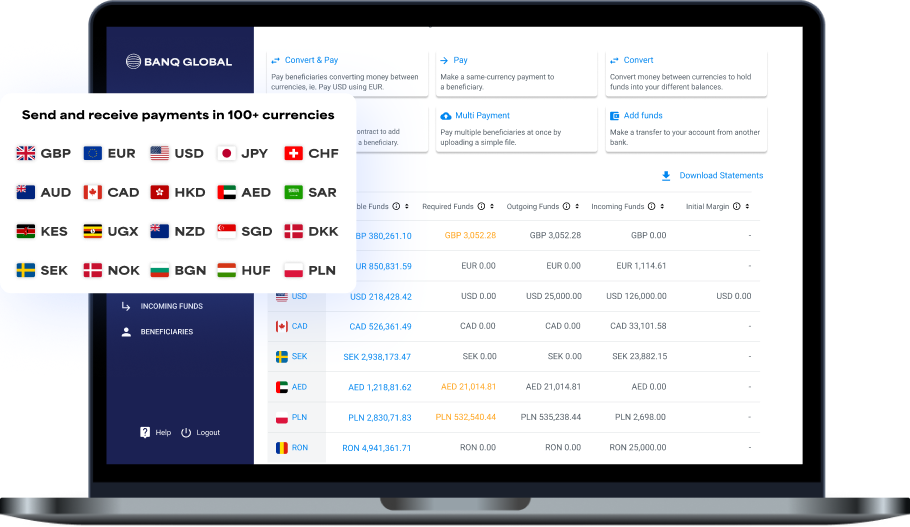
A holding company bank account or family office banking in DIFC or ADGM can have more complex requirements than a standard business account. Traditional UAE banks may require longer onboarding and additional checks for these structures. Specialist account providers such as Banq Global are built to accommodate the exact complexities inherent to holding companies, SPVs and family offices. It offers digital onboarding, welcomes directors and shareholders from 190+ countries, and provides multi-currency business accounts to support cross-border investment structuring, with the support of a dedicated relationship manager. Family office and holding company bank account setup in DIFC or ADGM can take as little as five days once the required documentation is received.
FAQs
What are DIFC and ADGM?
ADGM and DIFC are two major financial free zones in the UAE. DIFC is located in Dubai, while ADGM spans Al Maryah Island and Al Reem Island in Abu Dhabi. Both have independent court systems, with the DIFC Courts and ADGM Courts operating within English-language common law frameworks, alongside frameworks for arbitration and alternative dispute resolution. The choice between DIFC and ADGM depends on the entity’s structure, activities and banking requirements.
Do DIFC and ADGM offer corporate tax benefits and regulatory sandboxes?
DIFC and ADGM entities that qualify as Qualifying Free Zone Persons (QFZPs) are subject to zero corporate tax on qualifying income and 9% on taxable income that is not qualifying income. Both centres also support a fintech ecosystem through regulatory sandbox programmes, including DIFC’s ITL and ADGM’s RegLab.
Who regulates companies and financial services in DIFC and ADGM?
In DIFC, the DIFC Registrar of Companies handles company registration, while the Dubai Financial Services Authority (DFSA) regulates financial services. In ADGM, the ADGM Registration Authority handles company registration and commercial licensing, while the Financial Services Regulatory Authority (FSRA) regulates financial services.
How do banks verify the regulatory status of DIFC and ADGM entities?
Banks assess an entity’s jurisdiction of registration and business activities to determine the applicable regulator, then cross-reference official public registers to verify its regulatory status and permitted financial services. The DFSA Public Register, for example, shows whether a firm is regulated and the financial services it is licensed to provide, as DFSA authorisation does not permit a firm to provide every type of financial service.
What's the difference between banking for a Single Family Office and a Multi-Family Office in DIFC or ADGM?
An SFO manages one family’s own wealth and may not require the same financial services authorisation as a firm serving external clients. An MFO serving multiple families may carry out regulated financial services, which can introduce additional banking checks related to its regulatory status and permitted activities.
Can a DIFC or ADGM holding company open a business bank account without visiting the UAE?
Yes, but options are limited and depend heavily on the chosen bank’s digital onboarding policies and your ownership structure. Some providers offer remote onboarding through video KYC, while others may require authorised signatories to complete in-person verification and provide notarised copies of documents. Specialist providers built for non-resident structures can complete onboarding remotely.
What ongoing compliance is required after opening a business account for a DIFC or ADGM entity?
After opening a DIFC corporate bank account in Dubai or an ADGM business account in Abu Dhabi, ongoing compliance obligations may include maintaining an active trade licence, keeping UBO and corporate tax registration information up to date, completing applicable annual filings and providing audited financial statements where required. Economic Substance Regulations (ESR) reporting no longer applies after 2022.