Sweden has a population of over 10 million and ranks 10th globally in ease of doing business, making it a great place for startups and international companies. For foreigners, opening a business bank account in Sweden is an important step for operating in this growing Nordic market. With more than 12,000 foreign-owned companies active in Sweden each year, traditional banks tend to have strict, residency-based requirements, while digital banks offer easier onboarding but limited Swedish account functionality, and specialist global providers bridge both worlds by supporting non-resident complex companies with more flexible, multi-country account options.
Why Is Having a Business Account in Sweden Beneficial?
For foreign entrepreneurs and non-residents, a business account in Sweden is essential for credibility, smooth business operations, and compliance with local regulations.
Professional Credibility
A Swedish business account helps build trust with clients, suppliers, and partners. Banks often require an account, F-tax certificates, and other documents for approval. Keeping business and personal finances separate also simplifies financial transactions.
Payroll management
With the help of a business bank account, you can easily pay employees and manage salaries while staying compliant with Swedish tax laws. Moreover, overdraft facilities, multi-currency accounts, and digital banking services make payroll and daily operations seamless.
Multi-Currency & International Transactions
Business accounts provide multi-currency support, enabling international transfers, currency exchange, and global payments with ease, making them ideal for SMEs and larger companies working with clients and suppliers across borders.
Easy Account Access & Online Services
These accounts provide convenient online access, two-factor authentication, account details, and minimal to no in-person requirements. So, non-resident directors and foreign entrepreneurs start and manage operations efficiently.
Smooth Business Operations
To manage business operations effectively in Sweden, a business account with features for handling domestic transfers, invoices, cash deposits, and daily transactions is essential. It ensures operations run efficiently and supports the ongoing business needs of SMEs and larger or complex companies.
Residency and Presence Requirements
- Many Swedish banks require a local Swedish address (not residential) and still ask for an in-person meeting or physical visit, while digital as well as specialised options allow foreign entrepreneurs to complete account opening entirely online.
- Non-EU citizens may need to show strong business ties to Sweden, and if no board members reside in the EEA, a Swedish contact person must be appointed.
Registration Requirements
To legally operate in Sweden, foreign entrepreneurs must complete business registration with Bolagsverket (Swedish Companies Registration Office) and tax registration with Skatteverket (Swedish Tax Agency), including obtaining an F-tax certificate for taxation and VAT obligations.
Documents Required to Open A Business Account in Sweden
To open a business account in Sweden, foreign entrepreneurs typically need
- A valid passport or ID
- Company registration certificate from Bolagsverket
- F-tax certificate from Skatteverket
- Swedish business registration number
- Swedish personal identification number (Personnummer) – often required, though some banks may make exceptions.
- A business plan
- Details of ultimate beneficial owners.
However, the exact requirements differ depending on which platform you are using to open a business account in Sweden.
Choosing the Right Type of Banking Provider for Your Business in Sweden
When opening a business bank account in Sweden as a foreign entrepreneur, you have three main options: traditional banks, digital banks, or global business account specialists.
Traditional Swedish Banks
Some of the most widely used traditional banks include Swedbank, SEB, Handelsbanken, and Nordea. They offer full-service banking, including credit lines, loans, and corporate support, making them suitable for businesses that require comprehensive financial products. However, these banks often require a Swedish address, a local representative, and in-person verification, which can make account opening slower and more costly.
Digital and Fintech Alternatives
Leading fintech platforms for foreign entrepreneurs include Revolut Business, Wise Business and Mercury. Revolut and Wise suit simple foreign companies needing multi-currency accounts and fast international payments, while Mercury offer quick account opening and streamlined online banking without requiring a Swedish presence. However, these digital banks offer less personalised support and may be less suitable for complex ownership structures or high-value international transactions.
Global Business Account Specialist
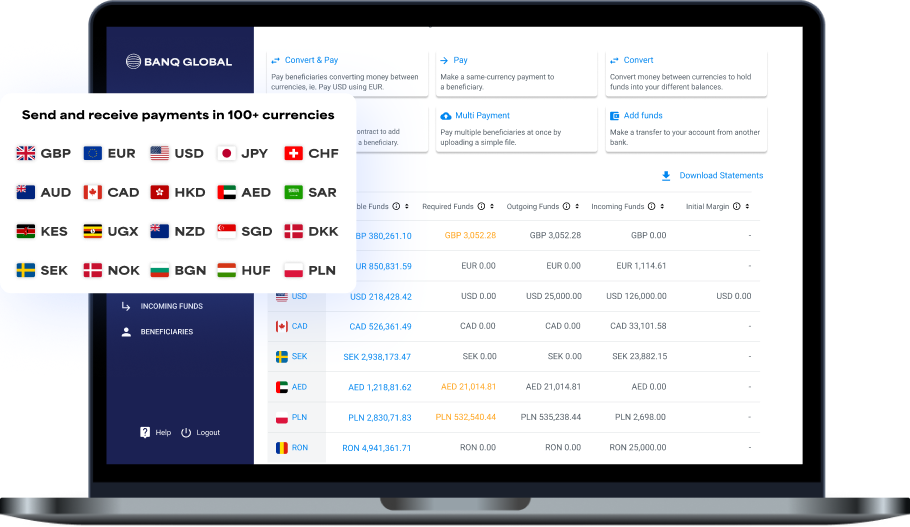
Global business account specialists like Banq Global serve large or complex companies, offering multi-currency accounts, fast international transfers, advanced services, and dedicated account managers. They handle complex ownership, multiple beneficial owners, and cross-border operations, providing mass payments, trade finance, and compliance support that standard digital or traditional banks cannot match.
How Long Does It Take to Open a Business Account in Sweden for Foreigners?
Opening a business account with traditional Swedish banks usually takes longer because they require in-person verification, local documentation, and detailed compliance checks. Digital banking options tend to offer a much faster, fully online application process, though this speed can be limited for companies with complex ownership structures or high-risk industries.
Global business account specialists generally provide a more streamlined and adaptable onboarding process. Timelines can vary based on verification requirements and business complexity, but these platforms focus on offering personalised support, guiding foreign entrepreneurs through Swedish regulatory obligations, and ensuring a smoother account-opening experience from abroad.
Common Challenges for Non-Resident Entrepreneurs
Non-resident entrepreneurs with larger businesses or complex ownership structures often face significant challenges when attempting to open a business bank account in Sweden. In addition to language barriers and paperwork in Swedish, businesses with intricate ownership setups or multiple stakeholders may find it difficult to navigate Sweden’s banking requirements.
Moreover, many non-residents lack the Swedish-specific expertise necessary to understand the country’s tax registration process and regulatory alignment requirements. For businesses with bespoke situations—such as non-resident directors, cross-border operations, or complex financial arrangements—finding a banking solution that can accommodate these needs is crucial.
How Banq Global Makes Opening a Swedish Business Account Easy?
Banq Global is built to solve these challenges in a simple and personal way, especially for non-resident entrepreneurs who have more complex business setups.
- With fully online onboarding and quick account approval, you don’t need to visit Sweden or go through in-person checks. Everything is handled smoothly from wherever you are.
- Unlike traditional banks, Banq Global gives you direct access to real experts—not automated replies—so you always have someone who truly understands Swedish rules, tax registration steps, and what your business needs to stay on the right track.
- Whether your company has multiple owners, non-resident directors, or international operations, Banq Global is designed to support setups that most standard banks and digital platforms struggle with.
- You will surely get personalized guidance at every stage, helping you understand what Sweden requires and making the whole process feel far less complicated.
- With a mix of local expertise and a hands-on, human approach, Banq Global offers a flexible and reliable way for non-residents to manage their Swedish business accounts—no matter how unique or complex their structure may be.