Following major banking scandals in the 2010s, most notably the Danske Bank Estonian branch case involving around €200 billion in suspicious transactions, Danish banks have strengthened KYC and AML compliance. These checks now apply to all clients. However, scrutiny is higher for non-residents, high-risk jurisdictions, and complex corporate structures. Moreover, the whole process is highly digitalised, with rigorous background checks at every stage. Due to these checks, opening a business bank account can take weeks or months for international entrepreneurs, multinational groups, and foreign companies. Moreover, companies without a local presence, a Danish CVR, or a CPR number face additional challenges, making careful preparation necessary for successful onboarding & smooth operations.
Quick Overview of Danish Business Bank Accounts
A Danish business bank account is a corporate account for companies registered in Denmark, which allow them to process payments, pay suppliers, cover operational costs, and handle employees’ salaries. It also helps in supporting Danish krone (DKK) transactions, simplifies bookkeeping and ensure compliance with Danish laws.
Most banks in Denmark require companies to complete a structured onboarding and compliance review. The process generally takes two to six weeks, depending on the company’s ownership structure, business activities, and the completeness of submitted documentation. Businesses with transparent structures and well-prepared documents often receive approval more quickly.
Is Opening a Business Bank Account in Denmark Difficult?
Yes, opening a business bank account in Denmark is generally considered difficult for international businesses due to strict anti-money laundering (AML) regulations and KYC (Know Your Customer) requirements. Non-resident businesses or those without a local physical presence often face significant challenges, including high fees (approx. 4,000–5,000 DKK) and long approval times. In many cases, the choice of banks is limited. Most companies end up applying with a small number of institutions that have stricter compliance checks, whether traditional banks or fintech providers.
Main challenges for foreign entrepreneurs include:
- Obtaining a unique 8-digit CVR number (the Danish company registration number)
- Possible CPR number requirements for company directors
- Expectations for a local address or presence
- Requests for in-person verification meetings with bank representatives
Moreover, applications may also be rejected if banks cannot clearly understand the company’s business model.
Step-by-Step Process to Open a Danish Business Account
Step 1: Choose the Danish business Structure according to Capital Requirements
The first step in opening a business bank account in Denmark is selecting a suitable business structure to register the company. Both small and larger businesses—local or foreign—must choose a structure that aligns with their business type, capital requirements, and operational needs.
ApS (Private Limited Company)
An Anpartsselskab (ApS) is a private limited company and the most common structure used by international businesses establishing a Danish entity. It allows 100% foreign ownership and requires at least one shareholder and one director. The company provides limited liability, meaning shareholders are only responsible for the capital they invest. An ApS requires a minimum share capital of DKK 40,000, which is reduced to DKK 20,000 on February 27, 2025.
A/S (Public Limited Company)
An Aktieselskab (A/S) is a public limited company structure in Denmark commonly used by large enterprises and multinational groups, particularly those planning to raise public capital. It requires a minimum share capital of DKK 400,000. At least 25% of this amount, or DKK 100,000, must be paid when the company is registered.
In addition, the structure has a more formal governance framework, including a mandatory Executive Board and Board of Directors or Supervisory Board, while shareholder liability is limited to their capital contribution.
Sole Proprietorship
A sole proprietorship in Denmark, known as an enkeltmandsvirksomhed, is a simple business structure often used by freelancers and small local businesses. It requires no minimum share capital or incorporation fee and involves minimal administration. However, the owner and the business are legally the same entity, meaning the owner has unlimited personal liability for all debts and obligations. This makes it less ideal for international companies or more complex ownership setups.
Step 2: Register the company with the Danish Business Authority
After selecting a business structure, foreign investors must fill an incorporation form with the Danish Business Authority (Erhvervsstyrelsen). Most companies use Startblanketten (40.001) to register, while foreign parent companies may use form 40.112 (Non Danish company) to begin the registration process.
Before opening a business bank account in Denmark, share capital (DKK 20,000 for ApS, DKK 400,000 for A/S) must be deposited into a temporary capital deposit account (kapitalindbetalingskonto). This can be arranged at a Danish bank or via a lawyer’s or auditor’s client account. The funds are kept safe during company formation until the business is officially registered.
Documents Needed for Company Registration
- Articles of Association / Company Agreement
- Memorandum of Association / Stiftelsesdokument
- Declaration of Directors and Shareholders
- Identification Documents (Passport / National ID)
- Proof of Temporary Capital Deposit (kapitalindbetalingskonto)
- Special Appendices for Foreign Companies (Appendix 40.115, 40.116, 40.117)
All the documents are submitted completely digitally via the Virk.dk portal, using a Digital Signature (MitID) for secure submission.
Step 3: Obtain a CVR number
The Danish Business Authority reviews the submission, and issues a CVR number (Det Centrale Virksomhedsregister) upon approval. It serves as the company’s official identification and functions like a corporate tax ID. It is used by:
- The Danish Tax Agency for VAT and corporate taxes
- Government authorities for compliance
- Business partners and clients for contracts and invoicing
Most banks will not accept a corporate banking application without a CVR number, so obtaining it is an important step before proceeding with banking or other official operations. Once issued, your company is officially recognised and ready to continue with banking.
Step 4: Prepare corporate and KYC documentation
When opening a business bank account in Denmark, banks typically request the following documents:
- Certificate of Incorporation
- Articles of Association
- CVR registration details
- Shareholder and director identification documents (passport or national ID)
- Proof of address (utility bill, lease agreement, or similar documentation)
- Business plan and company activity description
- Financial statements (if the company is already operating)
Banks may also request supporting financial information such as cash flow projections, profit and loss forecasts, or balance sheet estimates to evaluate a company's financial stability. It is important to note here that preparing all documents in advance can significantly improve the chances of a successful application and reduce onboarding delays.
Step 5: Legalize and translate documents
For foreign companies, documents submitted to Danish banks must be in Danish or English. If corporate or identification documents are in another language, then they must be translated by a certified translator.
Danish banks may also require documents to be notarised and certified with an apostille to confirm authenticity. Common documents requiring apostille include:
- Certificate of Incorporation
- Articles of Association
- Power of Attorney (if applicable)
- Passport copies of directors and shareholders
Delays or rejections of Danish business bank account applications can also happen if the legalisation of documents is incorrect or incomplete.
Step 5: Choosing the Right Banking Option
When opening a Danish business account, companies typically choose between three main banking options. The best option depends on company structure, residency of directors, business complexity, & need for international payments.
Traditional Banks
Traditional Danish banks provide full corporate banking services and access to the domestic payment infrastructure. Examples include Danske Bank, Nordea, Jyske Bank, and Nykredit. These institutions offer local payment infrastructure, corporate lending, treasury services, and merchant solutions. However, they typically require extensive documentation, detailed compliance checks, and sometimes in-person meetings with company directors, making the onboarding process high-cost and time-consuming. Traditional banks also generally prefer businesses with a clear local presence in Denmark.
Fintech Solutions
Fintech Solutions provide an alternative for companies seeking faster onboarding and digital banking services. Examples include Wise Business and Revolut Business. Fintech accounts typically offer fully online account opening, multi-currency accounts, integration with accounting software, and international payment support in multiple currencies. While flexible, they may have limitations compared with traditional banks, especially for companies needing credit facilities or advanced treasury services.
Specialist Banking Providers
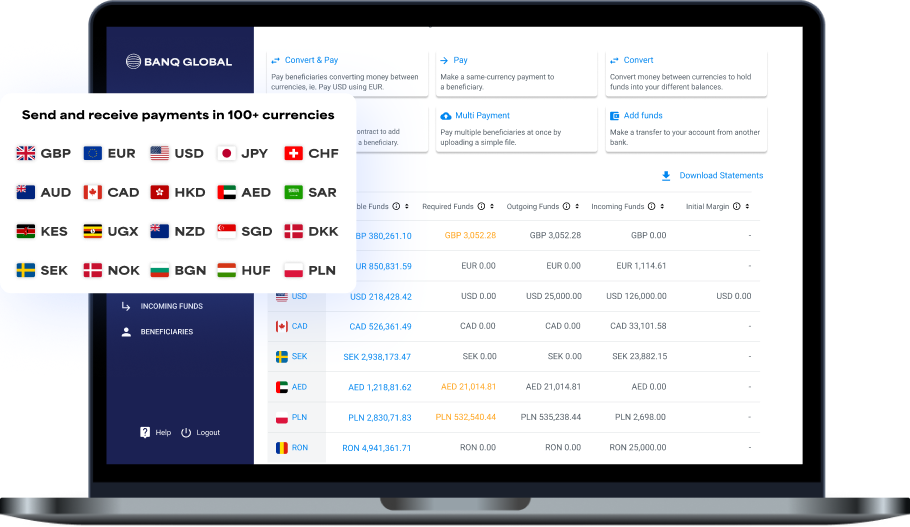
Specialist Banking Providers support international founders and companies with complex ownership structures who may struggle to onboard directly with traditional banks. They partner with banks and fintechs to help businesses open corporate accounts, guiding them through compliance documents, onboarding applications, and access to multi currency accounts. They also support SEPA and SWIFT payment capabilities, making international transactions seamless. For example, Banq Global assists international businesses in opening Danish accounts through partner banks, while providing guidance on compliance and onboarding.
Step 6: Submit Application to the Bank You Select
After preparing all corporate, KYC, and legalised documents, the next step is to submit your application to the bank you select. The bank will review your submission, conduct AML and KYC checks, and may request additional information, including details regarding any CPR numbers for company directors.
Do company directors need a CPR number to open a business bank account in Denmark?
CPR number is the 10 digit national personal identification number issued to residents in Denmark. Company directors or beneficial owners may also be required to provide a CPR number when opening a business bank account in Denmark.
Obtaining a CPR number requires
- living in Denmark for over three months (or 6 months for Nordic citizens)
- having a valid Danish address,
- holding a residence permit (for non-EU/EEA nationals) or a registration certificate (for EU/Nordic nationals).
- submitting a passport or ID, employment contract, and housing documentation, followed by a personal appointment at Citizen Service office.
For non-resident directors or shareholders, fulfilling these specific requirements can be challenging, especially for companies owned by foreign investors or international holding structures. In such cases, companies often appoint local representatives or directors with a CPR number to assist with onboarding and communication with banks. So foreign directors can stay involved without moving to Denmark.
Step 8: Receive account approval and activate payments
After reviewing your application, the bank will start the approval process. Traditional banks may take two to six weeks, while specialist providers with local representatives streamline compliance, document preparation, and onboarding, helping international businesses activate their Danish business account more quickly.
Tax and Compliance Considerations
After setting up a business bank account in Denmark, companies must comply with local accounting and tax regulations. Non-resident directors of multinational companies (MNCs) operating in Denmark are subject to specific tax and compliance obligations based on limited tax liability, primarily focusing on income derived directly from Danish sources.
Businesses generating more than DKK 50,000 in annual revenue are required to register for VAT (Value Added Tax). Danish companies must maintain proper financial records, including:
- Accounting documentation
- Financial statements
- Transaction records
- Tax reporting information
These records must be kept in accordance with Danish bookkeeping laws and may be reviewed by the Danish Tax Agency.
For foreign companies entering the Danish market, it is highly recommended to consult a local tax advisor or accounting firm to ensure compliance with regulatory requirements.
Final Checklist Before Applying: Everything You Need To Know
- Company registration completed and CVR number obtained
- Corporate documents prepared (articles of association, shareholder details)
- Identification documents for directors and shareholders ready
- Business plan and financial projections prepared
- Banking options researched and shortlisted
- Backup banking provider identified if needed
FAQs
How long does company registration take before opening a Danish business account?
Registering a company with the Danish Business Authority typically takes 1–4 working days once documents are submitted. After registration, the company receives a CVR number required for banking applications.
Can non-residents open a Danish business bank account?
Yes, but the process may be more complex for non-resident founders or directors. Some banks request CPR numbers, local addresses, or in-person meetings. Using fintech solutions or specialist providers can sometimes simplify onboarding for foreign companies.
How long does bank verification usually take in Denmark?
Compliance checks and due diligence typically take 1–3 weeks depending on the bank and business structure. During this time, banks review ownership structure, business activity, and identification documents before approving the account.
Are there fees associated with Danish business accounts?
Yes, fees are charged depending on the services provided and support for multiple currencies. Limited partnerships and other business types must ensure all fees are paid as part of account setup and maintenance.
Can foreign companies operate their own business in Denmark?
Yes, both local and foreign companies can run their own business in Denmark. They must comply with Danish market regulations, including accounting and tax laws. Specific requirements may apply depending on business type, residency, and work permits.
Why do applications get rejected when opening a business bank account in Denmark?
Applications are often rejected due to:
- Complex ownership structures without clear documentation
- Lack of local presence in Denmark
- High-risk industries
- Issues with legalisation or translation of documents
- Unclear business activity or financial projections
- Delays in obtaining a CVR number
- CPR number unavailability for directors or beneficial owners
Specialist providers can assist you through the whole process of opening a business bank account in Denmark and overcoming these rejections.