How to Pay Skatteverket: A Guide for Businesses
Sweden’s tax-to-GDP ratio stands at 41.4%, significantly higher than the OECD average of 34.1%, with VAT alone accounting for approximately 9.2% of GDP. This level of tax collection is possible largely due to the operational model of Swedish tax agency Skatteverket, which uses a proactive and digital-first approach to maintain one of the highest compliance rates globally.
In this context, the answer to how to pay Skatteverket is straightforward in principle for local residents. But the reality is different for foreign-owned Swedish companies, non-resident-controlled entities, CFOs, and corporate service providers managing Swedish subsidiaries or branches. In these cases, the real challenge is not to pay Swedish tax from abroad, but to have the right business account in place to settle tax obligations correctly and on time.
What Skatteverket is and What it Does?
Skatteverket is a government agency in Sweden responsible for national tax collection and population registration. Companies are required to register with Skatteverket for F-tax, VAT (where applicable), and employer contributions if they hire staff. Skatteverket assigns a skattekonto (consolidated tax account) to every registered company. This account is used to pay Swedish taxes and acts as a single ledger that records all tax liabilities, payments, and refunds in one place.
It is important to mention here that the Swedish Tax Agency only accepts tax payments over the Internet or through a prefilled paying-in form and does not allow cash or in-branch payments. Therefore, non-resident-controlled entities may require to use a Swedish business account that supports the ability to pay tax account Sweden from abroad.
Which taxes companies pay to Skatteverket?
Companies in Sweden pay several taxes and contributions to Skatteverket (the Swedish Tax Agency). Here are the main company liabilities that route through the tax account:
F-tax (Preliminary Corporate Income Tax)
Paid in monthly installments based on an estimated annual profit.
VAT (Moms)
Filed and paid monthly, quarterly, or annually based on turnover. Rates: 25% (standard), 12% (reduced), 6% (super-reduced).
Employer Contributions (Arbetsgivaravgifter)
Typically 31.42% of gross salary/benefits, reported monthly via the PAYE tax return (Arbetsgivardeklaration/AGI).
Withheld Income Tax
Income tax deducted from employee salaries, reported via the same monthly AGI.
Residual Tax (Kvarskatt)
Any outstanding tax balance after the final annual income tax assessment.
What Ongoing Compliance Is Involved When Foreign-Owned Companies Pay Skatteverket?
- Most monthly corporate obligations (including preliminary tax, PAYE tax, and employer contributions) fall due on the 12th of the month.
- Monthly VAT returns and payments are usually due on the 26th of the month following the reporting period or the 12th of the second month following a quarterly period.
- In January and August, the due date is typically the 17th.
- The payer is responsible for ensuring the correct SEK amount is recorded in the Swedish Tax Agency's bankgiro account by the due date.
- It is also crucial to verify the receipt of the payment in the Skattekonto (tax account) e-service.
Do I need to pay F-tax, VAT, and employer contributions as separate payments?
No. All taxes are consolidated into the company’s tax account (skattekonto). The company makes a single payment via the Skatteverket Bankgiro number (5050-1055), and the Swedish tax agency allocates the amount automatically against outstanding liabilities in date order.
What you Need to Pay Skatteverket?
To successfully pay tax account Sweden, foreign-owned Swedish companies must ensure their banking setup meets the following Skatteverket payment requirements:
Company Name Account
A SEK business account held in the Swedish entity’s legal name is required. As payments made from personal accounts and group-level accounts in another jurisdiction cannot settle the company’s tax liability cleanly.
Local Swedish IBAN
A local Swedish IBAN helps payments to be processed correctly within the Swedish banking system and avoid delays.
SEK Currency Payment
Payments must be made in Swedish kronor (SEK), as foreign currency transfers may create FX differences that leave the tax account underpaid.
Swedish Payment Rail Access
Access to domestic Swedish payment rails is important to avoid reconciliation issues and missed tax payment deadlines.
Tax Reference (OCR / Company ID)
A valid reference (company’s corporate identity number or OCR number linked to the tax account) is required, so Skatteverket can attribute funds to the correct skattekonto.
What Happens if Foreign Companies Pay Skatteverket with the Wrong Reference?
If a wrong reference is used to pay Swedish tax from abroad, the funds may credit another taxpayer's account, or sit unallocated. The foreign company remains liable for the tax owed and must contact Skatteverket to trace and reassign the payment. To avoid these issues, we recommend checking the payment reference carefully before sending them payment.
Why foreign-Owned Swedish Companies struggle with the Account setup and Swedish Business Tax Payments?
As the name suggests, a foreign-owned Swedish company is legally Swedish but operates with non resident directors or shareholders. This changes the banking and regulatory risk profile significantly and introduces stricter AML, KYC, and cross-border Swedish tax compliance obligations linked to non-resident tax Sweden.
The core issue is that Swedish financial institutions must, by law, identify and verify ultimate beneficial owners and the nature of the business, a process that is highly complex when the leadership is abroad. Without a local Swedish bank account, managing Swedish business tax payments, VAT, and employer contributions to Skatteverket becomes difficult, often leading to delays in receiving crucial F-tax status.
While some companies can be purchased quickly ("off-the-shelf"), the subsequent bank account activation for foreigners can take several weeks or even months. To avoid these delays, some businesses temporarily use a parent-company account to pay Swedish tax from abroad.
Can a Parent Company Pay Skatteverket on Behalf of its Swedish Subsidiary?
Mechanically the payment will land, but using a parent-company account creates audit trail and bookkeeping complications at the Swedish entity level. The Swedish subsidiary should settle its own tax liabilities from its own account.
Choosing a Swedish Business Account that can Pay Skatteverket
Choosing an account for Swedish business tax payment depends on your company structure, onboarding timeline, and need for local SEK payment support. Businesses generally choose between traditional Swedish banks, mass- market digital banking platforms, and specialist providers.
Traditional Swedish Banks
Traditional Swedish banks such as SEB, Handelsbanken, Swedbank, and Norde provide access to domestic payment rails and maintain strong regulatory standing in Sweden. However, foreign-owned Swedish companies and businesses with non resident directors often face longer onboarding reviews. Even approved applications may take 2 to 4 weeks.
These banks usually work best for Swedish-resident companies with simple ownership structures and limited international payment activity.
Mass-Market Digital Banks
Mass-market digital banks such as Wise, Revolut, and Mercury usually onboard businesses faster than traditional banks. However, these providers often do not offer a local Swedish business tax account held in the Swedish entity’s legal name or direct access to Swedish payment rails.
As a result, Skatteverket payments may be routed as international transfers, which can introduce FX differences, intermediary fees, delayed settlement, and OCR/reference-field handling issues. For foreign companies, this can create reconciliation and Swedish tax compliance complications.
Specialist Providers
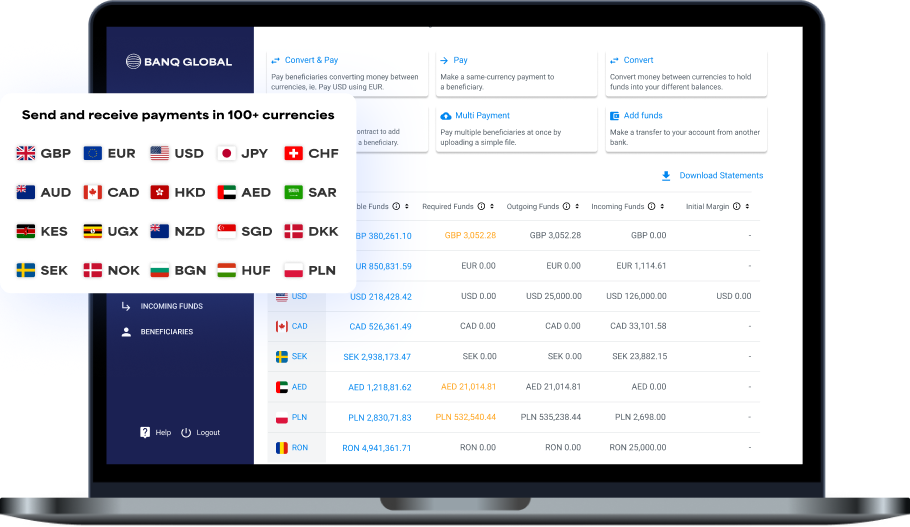
Specialist providers such as Banq Global are built for foreign-owned and non-resident-controlled Swedish companies. They provide a local Swedish IBAN and a SEK business account held directly in the Swedish entity’s legal name, with onboarding often completed within 24 hours. These providers are designed around Swedish tax compliance and support foreign companies to pay Skatteverket for F-tax, VAT, employer contributions, and other Swedish corporate tax payments on time. Direct access to Swedish payment rails also helps reduce FX issues, intermediary fees, reconciliation problems, and payment delays.
Common Mistakes That Delay or Misdirect Payments When You Pay Skatteverket
Avoid the following common, high-risk mistakes when you pay Skatteverket to ensure that payments are credited on time and accurately, preventing penalties, interest, and potential Kronofogden (Enforcement Authority) involvement.
- Paying from an account not held in the Swedish entity's legal name, Skatteverket can reconcile the funds, but the audit trail back to the taxpayer becomes fragile.
- Paying in a currency other than SEK without accounting for conversion variance, leaving the tax account short of the amount owed.
- Missing or malformed payment references, which can cause funds to credit another taxpayer's account.
- Relying on international transfer timelines without building in buffers, a payment sent on the due date from abroad rarely credits on the same day.
- Not verifying the tax account after payment: Skatteverket does not proactively confirm receipt, so reconciliation is the payer's responsibility.
FAQs
Can a foreign-owned Swedish company pay Skatteverket without a Swedish business account?
Technically yes, payments can be sent from a foreign bank account. In practice, the account should be held in the Swedish entity's legal name, capable of settling in SEK, and able to carry the correct reference. Most foreign-owned companies find that a local Swedish business account is the cleaner operational path.
Are there fees when paying Skatteverket?
Skatteverket itself does not charge for receiving payment. Your SEK business account provider may apply fees and FX spreads if the payment is routed internationally or converted from another currency, and those costs can reduce the amount credited when you pay tax account Sweden.
Can Banq Global provide an account that supports Skatteverket payments?
Yes. Banq Global issues Swedish business accounts in the company's legal name, supports SEK settlement to Skatteverket's tax account, and is built for foreign-owned Swedish entities, non-resident directors, and complex ownership structures.
How long does it take to open a Swedish business account that can pay Skatteverket?
Traditional Swedish banks typically take 2-4 weeks and can reject foreign-owned applicants. Specialist providers such as Banq Global approve accounts within 24 hours and are designed for foreign-owned and non-resident-controlled entities.
Does Skatteverket accept payment in currencies other than SEK?
Payment to the tax account is in SEK only. If sent from a foreign-currency account, the amount credited after conversion must match the liability in full by the due date. Shortfalls caused by FX movement are treated as underpayment.