How to Open a Business Account in Belgium as a Non-Resident?
Belgium ranks as the world's third most globalised country according to the KOF Index, reflecting its strong international connections and business-friendly environment. Combined with a highly skilled workforce, strong purchasing power, and a strategic location at the heart of Europe, Belgium continues to attract non-resident founders, overseas subsidiaries, and global businesses seeking a European base.
However, accessing business banking services in Belgium as a non-resident can be procedurally demanding due to the country's strict regulatory framework. Before approving an application, banks and account providers must meet KYC and AML compliance requirements, which include checks on complex ownership structures, shareholding structures, source of wealth, and source of funds verification.
Can a Non-Resident Open a Business Account in Belgium?
Yes, non-residents can open a business bank account in Belgium. But it's important to understand a few practical requirements and limitations that can affect eligibility, onboarding, and day-to-day banking.
BCE/KBO registration (mandatory for SRL, SA, and branch offices)
Before a Belgian bank will open a corporate account, your business must be registered with the Crossroads Bank for Enterprises (BCE / KBO). For incorporated entities, this process is typically preceded by a share capital deposit into a temporary blocked account and the execution of a notarial deed.
EU vs non-EU distinction
Another important factor is the applicant's country of residence. EU/EEA citizens and business owners face fewer hurdles than non-EU directors, who face stricter document requirements. Traditional banks may also require a professional card, a visa, or additional identity and compliance documentation from non-EU applicants.
Belgian Address Requirements
While Belgium does not legally mandate that you live in the country to open a business account. However, if you don't have a registered office in Belgium or a permanent establishment in Belgium, your options with traditional brick-and-mortar banks are more limited. Some digital and specialist providers may accept businesses without a Belgian address, although requirements vary by provider.
Belgian IBAN vs. SEPA IBAN
Article 9 of the SEPA Regulation (EU No. 260/2012) requires businesses to accept any valid IBAN from within the SEPA zone for credit transfers, and refusing a SEPA transfer based solely on the country of the IBAN is prohibited. However, a Belgian IBAN or local IBAN Belgium can still be valuable for Bancontact access, local B2B credibility, and Belgian VAT payment processes. While many providers offer SEPA accounts, only certain traditional and specialist providers offer a true Belgian IBAN.
Document Legalisation and Translation Requirements
Lastly, any document issued outside Belgium must first receive a Hague apostille from the competent authority of the issuing country. If the issuing country is not part of the Hague Convention, it requires a full chain of legalisation. Once authenticated, documents such as certificates of incorporation, articles of association, and board resolutions may need a certified translation into Dutch, French, or German, depending on the institution or authority reviewing the application.
What Documents are Required to Open a Business Account in Belgium as a Non-Resident?
To open a business bank account in Belgium as a non-resident director, banks and account providers require specific documents to satisfy KYC and AML compliance requirements. Having the following documents prepared in advance can help speed up the application process.
Company & Registration Documents
- The Articles of Association detail the company’s internal governance, voting rights, share classes, and corporate purpose.
- The BCE/KBO extract provides the official registration status, BCE number, registered address, and current directors.
Proof of identity documents
Banks require colour copies of government-issued passports or national ID cards (front and back) of account holders, legal representatives, beneficial owners and any authorised signatory who will have authority to operate the account.
Documents To Prove Registered Belgian Address
The company's operational headquarters is typically proven using a recent utility bill, rental address, official correspondence from Belgian tax/administrative authorities, or a registered commercial lease agreement.
Source-of-Funds (SOF) and Source-of-Wealth (SOW) Documents
Specific documentation detailing exactly where the initial capital originates and how the beneficial owners originally accumulated their overall wealth. General statements are often rejected; they must be backed by tax returns, audited accounts, or verified transaction histories.
Evidence of Active Business Operations
Documents such as signed client/supplier contracts, commercial invoices, or a comprehensive business plan for newly launched companies are required to prove that the business has tangible commercial activity in Belgium.
Ownership Documents
To trace individuals controlling or owning 25% or more, either directly or through intermediaries, a shareholding structure chart or ultimate beneficial ownership (UBO) chart displaying the entire ownership chain is required.
How do foreign-owned businesses avoid compliance issues when opening a Belgian business account?
Because foreign-owned companies often feature complex ownership structures or international corporate chains. To prevent non-compliance, non-resident directors must ensure disclosures are meticulously aligned across the Articles, the UBO Register, and the Crossroads Bank for Enterprises before opening a business account in Belgium online.
Types Of Business Account Providers In Belgium
Three options are available for opening a business account in Belgium as non-residents, i.e., traditional banks, digital account providers, and specialist account providers.
Traditional banks
Traditional banks such as ING Belgium, KBC Brussels, BNP Paribas Fortis, and Belfius offer Belgian business accounts that include local EUR IBANs, Bancontact services and access to SEPA & SWIFT transfers. However, opening a Belgian business account for foreigners often requires a branch visit or in-person video verification, together with a strict AML review, particularly where companies have non-EU directors or complex ownership structures. The onboarding process typically takes between two and six weeks. While ING and BNP Paribas Fortis offer English-language expat services, the main challenge is the procedural and compliance requirements rather than language barriers.
Digital Account Providers
Digital account providers and electronic money institutions, such as Wise Business and Revolut Business, provide faster digital onboarding. These payment institutions in Belgium are generally easier to access than traditional banks and can be suitable for straightforward non-resident businesses. They also support SEPA payments, multi-currency payments, and balances through user-friendly online platforms. However, they may not provide a Belgian IBAN and can have limitations when supporting complex ownership structures, holding companies, or international groups involved in non-resident business banking in Belgium.
Specialist Account Providers
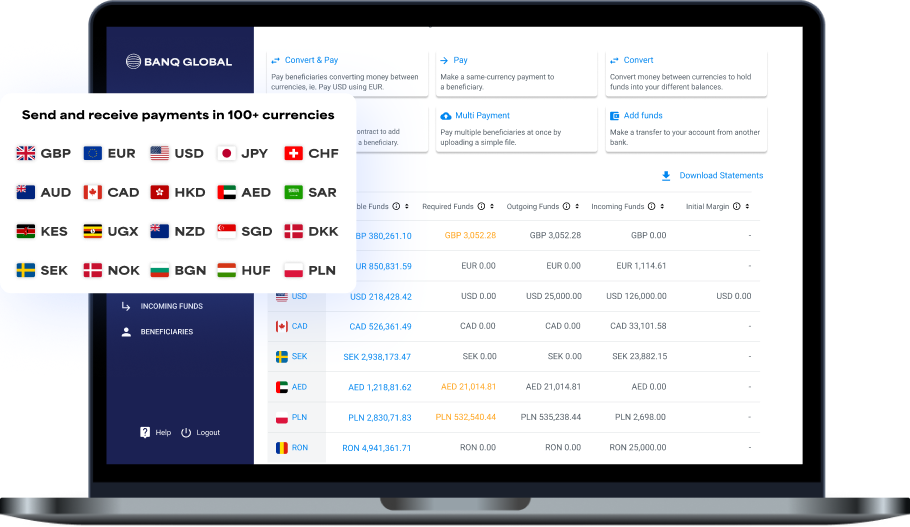
Specialist account providers are often the most practical alternative for non-resident directors, holding companies, SPVs, and international groups. For example, Banq Global offers a local Belgian IBAN, supports non-resident directors from more than 190 countries, and enables 100% remote account opening. Unlike traditional banks, specialist providers do not typically require branch visits and are designed to accommodate complex ownership structures. Compared with digital providers, they offer broader support for international businesses while still providing fast onboarding. They also support international transfers, Belgian and EU payment rails, multi-currency accounts, and foreign exchange at the mid-market rate, with account approval often available within 24 hours.
Steps to Open A Belgian Non-Resident Business Account
Opening a Belgian business account as a non-resident director requires careful preparation, notably when a foreign-owned company with a complex ownership and shareholder structure is involved. The process typically progresses through the following steps.
Step 1: Gather Required Documents
Before submitting an application, ensure all corporate, identity, ownership, and compliance documents discussed above have been prepared and are ready for review. If any of the documents are in a language other than Dutch, French, or German, ensure they are translated and legalised or apostilled before submission.
Step 2: Choose a Belgian Bank
Choose between a traditional bank, digital account provider, or specialist provider based on your business structure, onboarding timeline, compliance profile, and Belgian IBAN requirements. Businesses with non-resident directors or complex ownership structures may find specialist providers better suited to their needs.
Step 3: Submit Application to Open a Temporary Blocked Capital Account
If you are incorporating a Belgian company that requires a capital contribution, open a temporary blocked capital account with your chosen provider. Traditional banks may require an in-person appointment or video verification, while digital and specialist providers typically offer fully online onboarding.
Step 4: Deposit Share Capital and Obtain the Certificate
Next, deposit the required share capital into the blocked account. The amount depends on the company's legal structure.
- An NV (Naamloze Vennootschap / SA Belgium) requires a minimum share capital of €61,500.
- A BV / SRL Belgium (Besloten Vennootschap, older name SPRL) has no fixed minimum capital requirement, provided the amount contributed is sufficient to support the planned business activities and is justified in the financial plan.
Once the funds have been received, the provider will issue a Bank Certificate of Capital Deposit (bankattest) to confirm the deposit.
Step 5: Enact the Deed Before a Belgian Notary
This certificate, along with the articles of association and financial plan, is presented to a Belgian public notary to execute the deed of incorporation.
Non-resident founders who are unable to travel to Belgium may appoint an authorised representative using a power of attorney (PoA).
Step 6: Register the Company
After the deed of incorporation has been executed, register the company or branch with the Crossroads Bank for Enterprises (BCE/KBO). The civil-law notary typically handles these registration formalities for incorporated companies, including the required filings with the competent business court and FPS Finance.
Foreign businesses that do not wish to establish a subsidiary may instead operate through a Belgian branch, which can be registered online using eID authentication or by filing the required documents with the Business Court.
Step 7: Obtain a Belgian Company Number
Once the registration process is completed and applicable fees have been paid, the company receives a BCE/KBO number, which serves as its official Belgian enterprise identification number and must be used on invoices, contracts, and tax filings.
Step 8: Activating the Fully Operational Corporate Account
At the final stage of opening a business account in Belgium as a non-resident, the newly issued 10-digit BCE/KBO number and the published notary deed are presented to the bank. The bank will cross-reference this with the public BCE/KBO registry to verify the company's active legal status and release the funds into a professional account.
You must also work with an official Belgian Enterprise Counter (e.g., Liantis or Securex) to finalise your active BCE/KBO profile. The counter will register your specific economic activities (NACE codes), establish your local business units, and activate your Belgian VAT number (BTW/TVA number).
How long does it take to open a business account in Belgium as a non-resident?
The timeline varies by provider type and structure complexity. Traditional Belgian banks typically take two to six weeks from full document submission, with additional time for complex or multi-layered ownership structures. Specialist account providers, whose onboarding is designed for non-resident and international businesses, can approve accounts within 24 hours where documentation is complete.
Common Rejection Triggers When Opening a Business Account in Belgium as a Non-resident
- Failing to provide clear identity verification or detailed charts explaining an unclear ownership chain.
- Submitting official documents that lack required certified translations, notarisation, or apostilles for international use.
- Operating in restricted industries like crypto, gaming, gambling, or showing any exposure to sanctioned jurisdictions.
- Presenting paperwork with name discrepancies, conflicting dates, or outdated articles of association.
- Failing to demonstrate a clear local economic connection—such as Belgian clients, suppliers, or employees—at traditional banks.
- Background checks surfacing negative news, legal issues, or regulatory red flags regarding directors or UBOs.
What Happens if a Belgian Bank Rejects My Application?
Rejection by a traditional Belgian bank is not uncommon for foreign-owned entities, particularly those with complex ownership structures or non-EU directors. Digital providers may be accessible for simpler cases but are not designed for multi-layered international structures. Specialist account providers, whose onboarding process is built for non-resident and international businesses, are the most appropriate next step.
Ongoing Compliance and Non-Resident Business Banking Belgium
Managing a Belgian business account requires ongoing adherence to strict regulations, ranging from domestic anti-money laundering to cross-border tax transparency.
- Account holders must maintain up-to-date KYC and Ultimate Beneficial Owner (UBO) records, governed by the Belgian AML Law of 18 September 2017. All AML documentation and transaction records must typically be kept for a minimum of five years.
- Belgian banks and regulated providers report under the Common Reporting Standard (CRS reporting), so home-country tax authorities receive details of the account.
- Holding a Belgian business account alone does not create corporate tax liability in Belgium. However, a Permanent Establishment (PE) or an incorporated entity (like a Belgian subsidiary or branch) does trigger local corporate tax obligations.
- If the business engages in taxable activity in Belgium, VAT registration with the Belgian Federal Public Service Finance (FPS Finance) is required.
- If the entity (Belgian subsidiary) is incorporated in Belgium, annual accounts must be filed with the National Bank of Belgium. To meet Belgium's mandatory annual filing requirements, these records must be submitted to the Central Balance Sheet Office within 30 days of approval and no later than seven months after the fiscal year ends.
FAQs
Can a non-resident open a business account in Belgium online?
Yes. Belgian law does not prohibit non-residents from holding an international business account in Belgium, and traditional banks can accommodate foreign-owned entities but require a BCE/KBO-registered Belgian address and subject non-resident applications to thorough AML review. Specialist providers offer more direct online routes for non-residents without Belgian residency.
Do I need a Belgian address to open a business account as a non-resident in Belgium?
Most traditional Belgian banks require a registered office address in Belgium, linked to your BCE/KBO registration. Some digital and specialist providers accept a foreign address for the account holder, provided the business is legally registered in Belgium. If your entity is incorporated in Belgium as an SRL or SA, the registered office address used for BCE/KBO registration satisfies this requirement.
What is the BCE/KBO, and why does it matter for account opening?
The Crossroads Bank for Enterprises (BCE in French, KBO in Dutch) is Belgium's official business register, administered by the Federal Public Service Economy. Every company operating in Belgium, including a foreign subsidiary or branch office, must register before opening a business account at most Belgian institutions.
What fees should I expect for a Belgian business account?
Fee structures vary significantly by provider type.
- Traditional banks charge quarterly or monthly account maintenance fees, transaction charges for non-SEPA transfers and correspondent bank fees for SWIFT transfers (charged by intermediary institutions).
- Digital providers charge low or no monthly fees but apply per-transaction charges on international transfers.
- Specialist providers typically charge account setup and monthly fees that reflect the structural support and onboarding depth they provide.
Businesses that send or receive international SWIFT transfers may also incur correspondent bank fees, which are charged by intermediary banks involved in processing the payment.
Can I open a multi-currency Belgian business account as a non-resident?
Yes, though options vary by provider. Traditional Belgian banks primarily offer EUR accounts with limited multi-currency capability. Specialist providers like Banq Global offer access to 130+ currencies alongside a local Belgian IBAN, which is relevant for businesses that need to receive local Belgian payments while also transacting internationally.